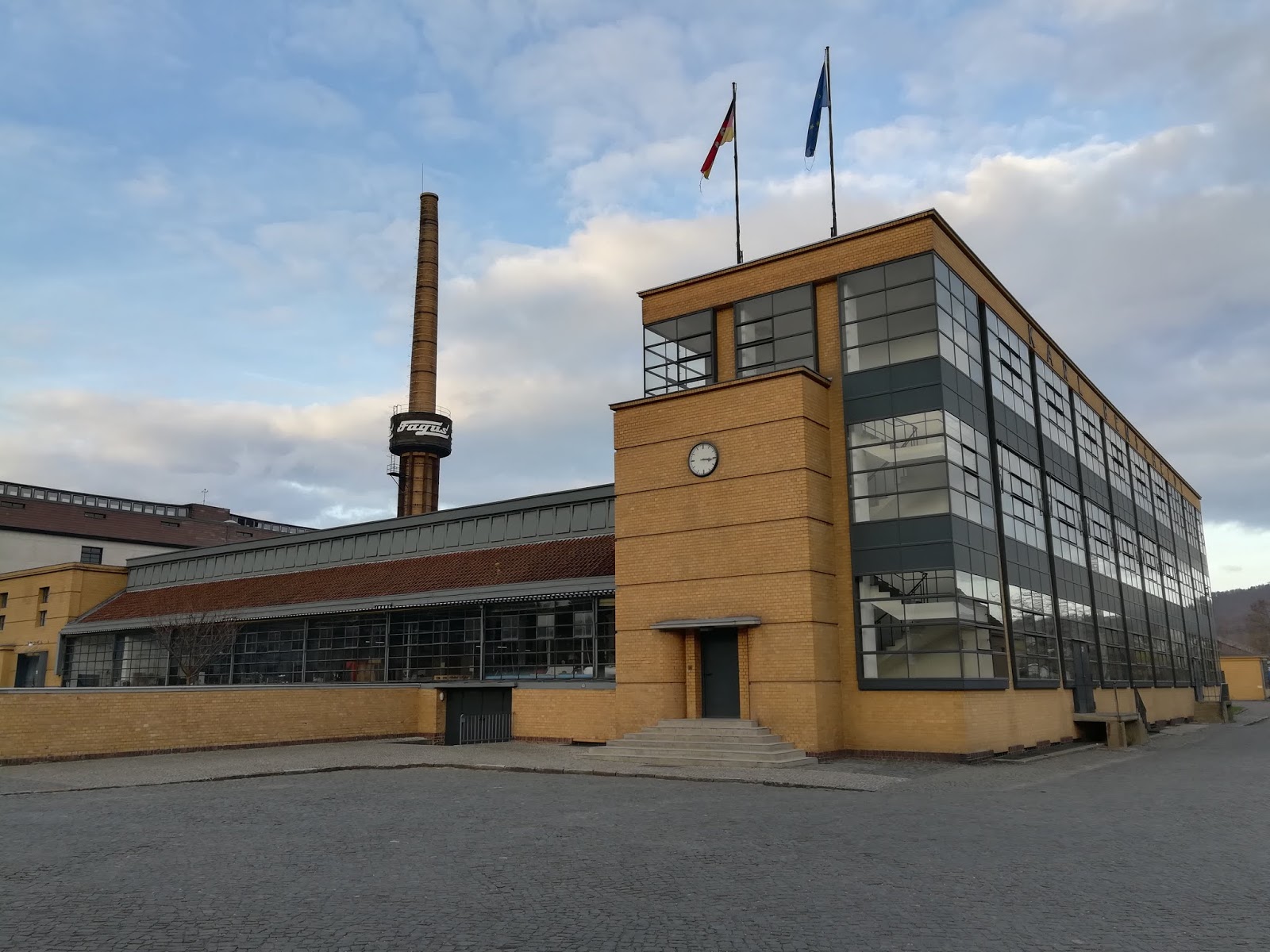
As Ania was heading to Hannover for a full day workshop I decided to join her up to Hannover and then continue onwards further south. So after taking the train from Hamburg's central station, Ania got off in Hannover and I continued further reaching the town of Höxter after switching in in a small village called Kreiensen. After reaching the destination I immediately headed along a pathway leading out of the town. In fact, I had come all this way specifically to visit the Unesco world heritage site of the Princely Abbey of Corvey. After walking a little while I finally reached the location of the abbey. Occupying a large area of land it consists of a serious of structure from different periods of time. After passing through the Baroque walls which surround the monastery I then reached a large building that marked the entrance to the complex. I found out that, due to the upcoming winter festivities, a small Christmas market had been set up inside the complex and thus a ticket was compulsory with the tours of the interior only happening in the afternoon. I was a bit disappointed but was told that the church was still open and located right next to the building. So after heading in that direction, I reached the main part of the monastery. The abbey was in fact built around the 9th century during the Carolingian period and subsequently, due to its growing richness and importance, refurbished and enlarged. The Carolingian church was first rebuilt in a Gothic style and then later rebuilt during the 18th century together with the rest of the complex. The Westwork, a monumental west-facing entrance typical of large churches of that period, is the only surviving feature of the Carolingian church. The example in Corvey is the oldest surviving one and was a marvel to look at as I approached it. As I entered through the main door flanked by two towers I reached the oldest part of the church which still kept its original Carolingian structure. A central hall was surrounded by arcaded balconies all the way to the top. From there, an archway led to the Gothic addition which consisted of a large central nave filled with Baroque altars and decorations. After seeing the interior I headed back out and in the direction of the city center of Höxter. Located on the western bank of the Weser River it is part of the state of North-Rhine Westphalia. As I walked through the old town I admired the nice timber-framed houses which in this part of Germany feature a darker color than those I had seen further north. I then passed by the church of St Nikolai which was closed but found the church of St Kilian to be open. Featuring an 11th-century Westwork and a general 14th-century gothic structure, it was highly refurbished throughout its history and contained several baroque furnishings. After visiting it I headed further into town and crossed through the main street which had the weekly market taking place. Once I reached the train station I then took a train and headed to the next town: Bad Gandersheim. This small town, located in Lower Saxony, is part of the German Timber-Frame Road and thus a stop which I decided to visit. As I walked through the old town streets I passed by some nice timber-framed houses and reached the main square where the town's main church, Gandersheim Abbey, is located. Around the square, some amusement rides and food stalls had been set up for the upcoming festivities as well as a curious small pen where a few goats, sheep, ponies and a mule where standing. I decided to grab a snack from one of the food stalls and had a typical German lunch: sausage and fries. After eating I then headed inside the church to take a look. Founded in 852 by Duke Liudolf of Saxony, the present structure of the abbey dates mostly to its Romanesque and Gothic reconstruction during the 12th century. Like in Hoxter this church also featured a Westwork. The interior featured some nice medieval remains such as gothic and renaissance tombstones. After exiting the church, I walked through the old town admiring its architecture and then headed back to the train station and waited to catch a train to the next destination: Alfeld. After switching once again in the small village of Kreiensen I reached my intended stop. I had decided to visit this place due to it being the location of the Unesco site, Fagus Factory. So after crossing the railway on the opposite direction of the old town, I walked for a few hundred meters and reached the entrance to the factory. As I approached the guard I asked if I could enter and he nodded in agreement. I then approached the building which still hosts a shoe last factory built between 1911 and 1913 by Walter Gropius and Adolf Meyer in a pioneering modernist architecture. Even though not a fan of modern architecture I had to give credit to the clearly modern looking design which drastically changed from the typical dark and somber factories of the 19th century to a nice looking glass-covered design which was supposed to inspire and keep happy the workers who would benefit of the light coming inside through the windows. After going around the building, as the inside could only be visited at specific times due to it still being fully functional, I then went back on my tracks and reached the train station from where I took yet another train, this time further north. I reached the town of Hildesheim a bit later which I had already seen a few months back but was hoping to check its famous Christmas market. So after leaving the station I directed myself towards the main square and was not disappointed to find it full-fledge in festivities. The square was packed with tourists and locals alike with the typical food stalls and carousels. After taking several pictures and enjoying the view of the diverse stalls I then headed back through the city and towards the train station from where I reached Hannover a little later, meeting up again with Ania and traveling back home together.
 |
| The complex of Corvey Abbey |
 |
| The Abbey's Westwork |
 |
| The Carolingian part of the church |
 |
| Interior of the church |
 |
| The Baroque furnishings |
 |
| !6th century house in Höxter |
 |
| Höxter's old town |
 |
| Another view of Höxter |
 |
| The Gandersheim Abbey |
 |
| View of the abbey and timber-framed houses |
 |
| A street in Bad Gandersheim |
 |
| The Alfeld Fagus Factory |
 |
| Christmas market in Hildesheim |
 |
| The carillon |