Showing posts with label Lower Saxony. Show all posts

Tuesday, September 10, 2019

Celle & Uelzen (20/01/2018)

After flying back to Hamburg, we decided to do another day trip during the weekend and opted to visit the towns of Celle and Uelzen with the train. After taking the regional in the direction of Hannover we reached Celle's station and got off to explore the city on foot. The weather was quite cold and a layer of frost had covered the ground. We walked through a public garden and then reached the Schloss Celle, a castle/palace built during the 16th century in the Renaissance style. It is surrounded by a nice park which we walked before entering the castle proper. Unfortunately, as my luck usually goes, the main facade was completely covered in scaffoldings and that meant evading that part when taking pictures. After paying the entry ticket we toured the building which included Baroque rooms filled with paintings and objects relating to the area's history. We toured most of the rooms but could not, unfortunately, see the chapel and theatre which were only visitable through a guided tour. I was a bit disappointed not to see the renaissance chapel especially after a room virtually showed the splendor of it. After the visit to the palace, we then crossed the park and entered the old town proper passing by the building holding the Bonnman Museum. A little further we reached the Markt, the city's main square with the church of St Mary at its center and some beautiful half-timbered houses around its perimeter. The town is, in fact, a member of the German Timber-Frame Road, and with its nearly 400 such houses one of its most remarkable examples. We entered the church and explored its interior, originally built in the gothic style during the 14th century it now presents a Baroque style from the late 17th century. Particularly noteworthy were the baroque organ and the gilded altar from 1613. After the visit to the church, we passed by the old town hall located on the eastern end of the square and featuring a baroque facade. We then continued on through the pretty old town streets admiring the beautiful multicolored facades of the timber-framed houses. After giving a nice round of the city center we then walked back through the castle's park and reached once again the station from where we took a train to the next town, Uelzen. A famous train hub the station was in fact redesigned by the Austrian born, New Zealand artists Friedensreich Hundertwasser with beautiful mosaics and red brick. After exiting the station we headed towards the city center and reached the main church, St Mary. Built around the 14th century it features a gothic structure with a large central bell tower jutting out among the low roofs surrounding it. Unfortunately, as we tried to enter we found all doors locked, so we decided to walk further. We passed through a nice street featuring some timber-framed houses here and there but realized that the town was rather empty and cold. After touring the small old town we then decided to head back to the station from where we finally took a ride headed back to Hamburg.


Inner courtyard of the Celle castle

The castle in Celle


Interior of the church of St Mary

The town hall

View of the bell tower and timber-framed houses

A street in the old town

Another street in the old town

The castle

The church of St Mary in Uelzen

View of the church's bell tower

A strete in the old town

Wednesday, July 24, 2019

Höxter, Bad Gandersheim, Alfeld & Hildesheim (01/12/2018)

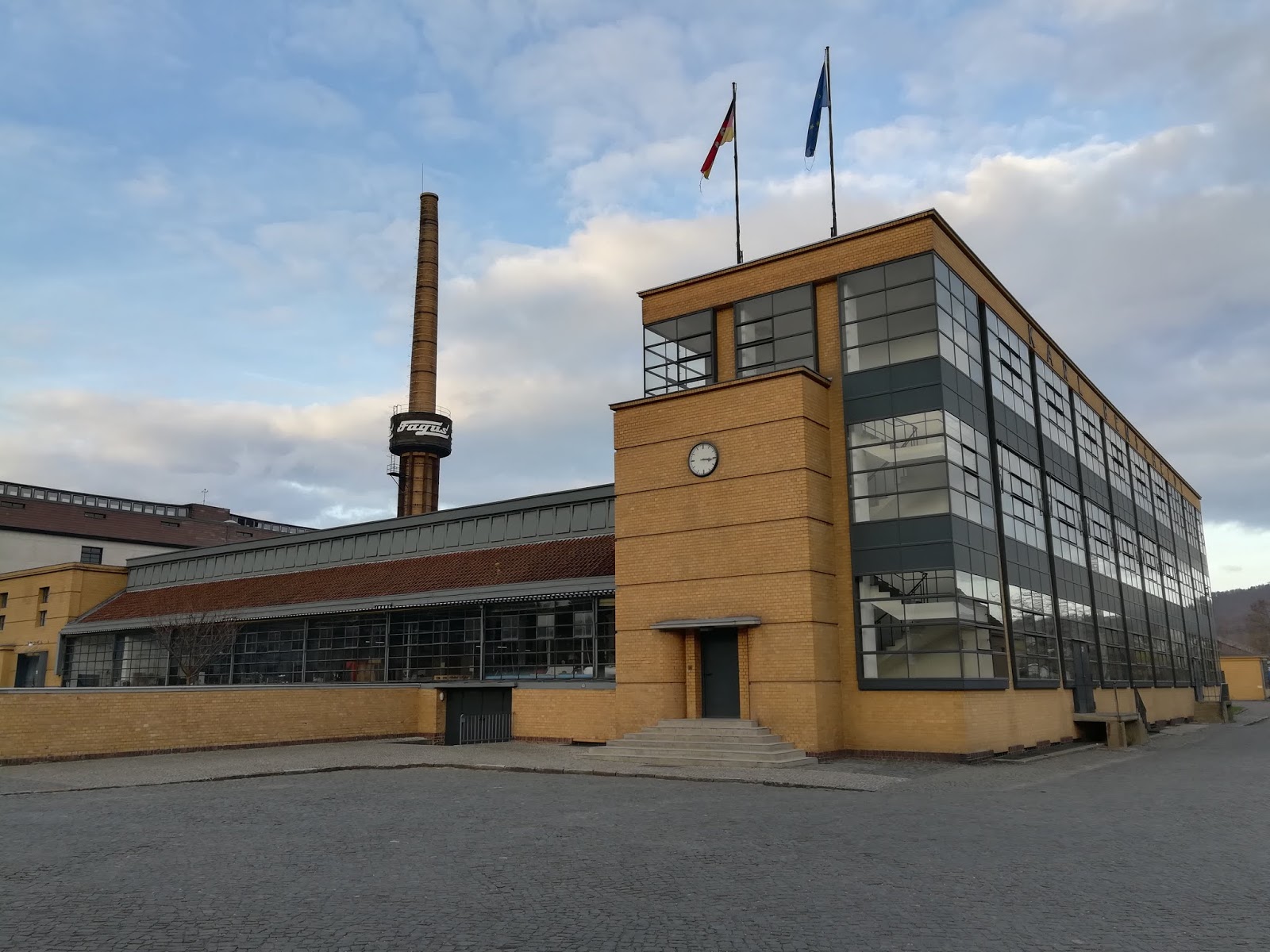
As Ania was heading to Hannover for a full day workshop I decided to join her up to Hannover and then continue onwards further south. So after taking the train from Hamburg's central station, Ania got off in Hannover and I continued further reaching the town of Höxter after switching in in a small village called Kreiensen. After reaching the destination I immediately headed along a pathway leading out of the town. In fact, I had come all this way specifically to visit the Unesco world heritage site of the Princely Abbey of Corvey. After walking a little while I finally reached the location of the abbey. Occupying a large area of land it consists of a serious of structure from different periods of time. After passing through the Baroque walls which surround the monastery I then reached a large building that marked the entrance to the complex. I found out that, due to the upcoming winter festivities, a small Christmas market had been set up inside the complex and thus a ticket was compulsory with the tours of the interior only happening in the afternoon. I was a bit disappointed but was told that the church was still open and located right next to the building. So after heading in that direction, I reached the main part of the monastery. The abbey was in fact built around the 9th century during the Carolingian period and subsequently, due to its growing richness and importance, refurbished and enlarged. The Carolingian church was first rebuilt in a Gothic style and then later rebuilt during the 18th century together with the rest of the complex. The Westwork, a monumental west-facing entrance typical of large churches of that period, is the only surviving feature of the Carolingian church. The example in Corvey is the oldest surviving one and was a marvel to look at as I approached it. As I entered through the main door flanked by two towers I reached the oldest part of the church which still kept its original Carolingian structure. A central hall was surrounded by arcaded balconies all the way to the top. From there, an archway led to the Gothic addition which consisted of a large central nave filled with Baroque altars and decorations. After seeing the interior I headed back out and in the direction of the city center of Höxter. Located on the western bank of the Weser River it is part of the state of North-Rhine Westphalia. As I walked through the old town I admired the nice timber-framed houses which in this part of Germany feature a darker color than those I had seen further north. I then passed by the church of St Nikolai which was closed but found the church of St Kilian to be open. Featuring an 11th-century Westwork and a general 14th-century gothic structure, it was highly refurbished throughout its history and contained several baroque furnishings. After visiting it I headed further into town and crossed through the main street which had the weekly market taking place. Once I reached the train station I then took a train and headed to the next town: Bad Gandersheim. This small town, located in Lower Saxony, is part of the German Timber-Frame Road and thus a stop which I decided to visit. As I walked through the old town streets I passed by some nice timber-framed houses and reached the main square where the town's main church, Gandersheim Abbey, is located. Around the square, some amusement rides and food stalls had been set up for the upcoming festivities as well as a curious small pen where a few goats, sheep, ponies and a mule where standing. I decided to grab a snack from one of the food stalls and had a typical German lunch: sausage and fries. After eating I then headed inside the church to take a look. Founded in 852 by Duke Liudolf of Saxony, the present structure of the abbey dates mostly to its Romanesque and Gothic reconstruction during the 12th century. Like in Hoxter this church also featured a Westwork. The interior featured some nice medieval remains such as gothic and renaissance tombstones. After exiting the church, I walked through the old town admiring its architecture and then headed back to the train station and waited to catch a train to the next destination: Alfeld. After switching once again in the small village of Kreiensen I reached my intended stop. I had decided to visit this place due to it being the location of the Unesco site, Fagus Factory. So after crossing the railway on the opposite direction of the old town, I walked for a few hundred meters and reached the entrance to the factory. As I approached the guard I asked if I could enter and he nodded in agreement. I then approached the building which still hosts a shoe last factory built between 1911 and 1913 by Walter Gropius and Adolf Meyer in a pioneering modernist architecture. Even though not a fan of modern architecture I had to give credit to the clearly modern looking design which drastically changed from the typical dark and somber factories of the 19th century to a nice looking glass-covered design which was supposed to inspire and keep happy the workers who would benefit of the light coming inside through the windows. After going around the building, as the inside could only be visited at specific times due to it still being fully functional, I then went back on my tracks and reached the train station from where I took yet another train, this time further north. I reached the town of Hildesheim a bit later which I had already seen a few months back but was hoping to check its famous Christmas market. So after leaving the station I directed myself towards the main square and was not disappointed to find it full-fledge in festivities. The square was packed with tourists and locals alike with the typical food stalls and carousels. After taking several pictures and enjoying the view of the diverse stalls I then headed back through the city and towards the train station from where I reached Hannover a little later, meeting up again with Ania and traveling back home together.


The complex of Corvey Abbey

The Abbey's Westwork

The Carolingian part of the church

Interior of the church

The Baroque furnishings


!6th century house in Höxter

Höxter's old town

Another view of Höxter

The Gandersheim Abbey

View of the abbey and timber-framed houses

A street in Bad Gandersheim

The Alfeld Fagus Factory

Christmas market in Hildesheim

The carillon


Wednesday, July 3, 2019

Goslar, Wolfenbüttel, Brunswick & Hildesheim (09/09/2018)

After a few days in Hamburg, we decided to do a day trip to Lower Saxony and meet up with a friend of ours from university, Jira. We took a regional train from the main station and then switched in Hannover; after arriving in the first town, Goslar, we found Jira who had arrived earlier and had been waiting for us. The first sight we encountered as we directed ourselves towards the city center was the Neuwerk church, a 12th-century Romanesque church, built in the imperial style similar to that of central western Germany. Walking further we then encountered another church, St Jacob's church, considered as the town's oldest church still in use, originally built during the 11th century. It suffered alterations through the centuries, particularly during the Reformation, though its exterior remained mostly unaltered. As we walked, we started to notice the many typical timber-framed houses which dot the whole city. As the town used to be famous in the middle ages for its mining activity, the houses here presented a different hue than the typical timber-framed houses and were rather more grayish with slates of rock inside the walls. A little later we reached the Marktplatz, or market square,  which was filled up with stalls due to an event going on in the city. At the center of the square stands the beautiful Romanesque fountain which is made up of parts dating from the 12th to the 13th centuries. All around, important buildings from the middle ages crown the perimeter, including the cloth merchant's Guildhall, the Kaiserworth, built during the 15th century, and the town hall started in the 1400s with additions throughout the centuries, particularly during the 16th century. Behind the square is the Market church of St Cosmas and Damian, originally built during the 12th century with major refurbishments during the 14th and 15th centuries. It presented a nice interior with some medieval traces still remaining and some elegant baroque additions. Right in front of the church's facade is the baker's Guildhall, a nice example of a typical building which we admired as we passed by. Passing more timber-framed houses we encountered a larger example, called the Siemenshaus, built at the end of the 17th century and belonging to the famous industrialist family Siemens. Later we reached a small and pretty square, devoid of any tourists, the Frankenberg Plan. It was surrounded by typical houses and a nice medieval fountain restored in 1951. Walking further, we continued on a street called Peterstrasse, which I ended up considering as one of the nicest in the whole town, slightly curving and lined by beautiful timber-framed houses. Passing by another street lined by a pretty canal covered with trees we then reached the Kaiserpfalz Imperial Palace. Built between 1040 and 1050 under the reign of Henry III it served as the main palace of the Holy Roman Emperors, particularly the Salian family,  for about 200 years. We, unfortunately, did not manage to visit its interior, which was heavily restored during the 19th century, but we still admired its opulence from the outside. On the grassy opening in front of it a flea market had sprung up and many visitors were strolling around admiring the wares. We did the same for a bit at then continued on through the city, passing by the Collegiate church, also known as the town's cathedral, built during the 11th century but nearly completely destroyed at the beginning of the 19th century, with just the porch of the north altar remaining. We continued on through the old town admiring the architecture for a while and then finally heading to the train station where we took the next ride in the direction of the next city: Wolfenbüttel. Our first stop was the Schloss, the town's castle, a beautiful moated Baroque residence which served as the main residence for the Principality of Brunswick-Wolfenbüttel between 1432 and 1753. We were able to admire the inner courtyard but as it was a museum decided to skip visiting the interior and instead see it just from the outside. Not far we then reached the building which hosted the Herzog August Library, an internationally renowned institution known for its collection of medieval and early modern books. Walking on we then reached the old town, and an area called Klein Venedig, or little Venice, as it features a small river, the Oker, lined with buildings. We walked along the streets and admired the beautiful timber-framed buildings all along the way. We found out in fact that the city has the largest concentration of them in the whole of Germany. We then stopped to have a quick lunch and continued on through the pretty city center streets. As we went further we then reached the town's main church, the Mariekirche, dating to the 17th century and with a nice interior. Then back to the train station, we headed on to the third town: Brunswick, or Braunschweig in German. The ride was short, and we reached the city a few minutes later. As the station was a bit far out we decided to board a bus and reach the core of the city. After descending, we reached the Burgplatz, or castle square, which comprises the most important buildings. At its eastern side stands the Dankwarderode castle, a residence built in the 12th century for the Duke of Saxony, then Henry the Lion. The present structure though dates to a rebuilding carried out in 1887. On the northern side of the square are some timber-framed houses, while the western side is closed by the neogothic town hall. At the center of the square stands the copy of the Burglowe, or Brunswick Lion, a bronze monument from the 12th century (the original is in the building in front of it to spare it from the weather). At the southern end of the square, we then entered the large cathedral. This 12th-century building features an impressive interior with some old features still remaining such as the tombs of Otto IV, Holy Roman Emperor, and that of Caroline of Brunswick, Queen consort of the British monarch George IV. As we continued through the city we then reached another square, the Altstadtmarkt, which had a nice fountain, called the Marienbrunnen, dating from 1408. Probably one of the prettiest spots of Brunswick, the square was surrounded by old buildings, including the gothic old town hall from the 13th and 15th centuries, the Gewandhaus from the 13th century, the baroque Stechinelli Haus from 1690, and the 12th-century church of St Martin which we proceeded to visit. Walking back, we passed through the lively Kohlmarkt and then reached the large Brunswick Palace. Built during the 18th century to replace the medieval palace as the residence of the Dukes, it was unfortunately heavily bombed during WWII and demolished in 1960. A faithful reproduction, which we could now see, was done during the early 2000s and now hosts a museum and a shopping center. As we circle the huge building we then reached a spot where a funny colored house, the Rizzi Haus, had been built by the American architect for the expo 2000. Right across from it is a house which is considered as Germany's oldest half-timbered house, but probably not so as there are older ones in the towns surrounding the Harz region south of the city. We were now in an area called the Magniviertel, characterized by cobblestoned strees and timber-framed houses which hosted several little shop and cafés. At the center of a large clearing is the church of St Magnus, which featured a nice 13th-century Romanesque structure. From there we then took a tram which brought us back to the train station where we took a train westwards to the final town of the day: Hildesheim. As it was getting later in the afternoon, as soon as we arrived I suggested to immediately head to the main sights before closing time. So after a little bit of power walking, we reached the St Michael's church, an 11th-century Romanesque building considered as one of the most important early Christian religious structures. Despite being heavily bombed during WWII, which was evident from its reconstruction, it still gave an impressive sight. The interior is simple, as the architectural style requires, and presents some nicely decorated capitals and a crypt containing an ancient tomb. Surprisingly, the whole painted ceiling dating to the 13th century and depicting the genealogy of Christ survived the bombing. Next on we reached yet another impressive Romanesque monument, the St Mary's Cathedral. Together with St Michael's church, it was inscribed in the Unesco list due to its importance. Built during the 11th century, it was unfortunately completely destroyed during WWII and rebuilt right after. Fortunately, apart from its structure, some interior remained intact, and once inside we were able to admire two Romanesque wheel chandeliers from the 11th centuries, the Hezilo and Azelin chandeliers, a bronze baptismal font from 1225, and the Bernward Column dating from around the beginning of the 11th century, cast in bronze and depicting the life of Jesus in a similar helix fashion to that of Trajan's column. We then went out to the cloister, which in this case is located right behind the apse, and walked around the many tombs of the monks who once inhabited the complex. Right behind the apse, grows what is known as the Thousand-year Rose, reportedly the world's oldest living one. In the crypt below the church's pavement, we also saw several ancient tombs as well as the golden shrine of Epiphanius of Pavia, dating from the 12th century and manufactures with beautiful gems. As we exited we then admired another feature which survived the war: the bronze 11th-century Bernward doors. They are considered as a masterpiece of Ottonian art and feature the oldest known monumental image cycle in German sculpture, and also the oldest cycle of images cast in metal in Germany. As we continued through the old town we passed yet another church, St Andreas, which was already closed but we still admired its gothic structure and its steeple which is the highest in Lower Saxony. Then we reached the Marktplatz, destroyed during the war but faithfully reconstructed, it features some beautiful buildings all around its perimeter. Among many timber-framed buildings, stand out the Gothic town hall from the 13th century, and two beautiful guild halls, the Butcher's and Baker's ones, the former dating to the 16th century while the latter to the 19th century. After admiring the square and its wonderfully reconstructed buildings it was time to go. We headed to the train station where we had a quick dinner at an Asian chain before taking our respective trains, Jira to Gottingen, and Ania and I back to Hamburg.


The Neuwerk church in Goslar

The Marktplatz in Goslar


The merchant's guildhall
One of the streets in the old town

The nice Peterstrasse

Another view of the Peterstrasse

Wolfenbüttel's Schloss

The little Vemnice in Wolfenbüttel


A street in the old town 

Brunswick's Catheral

The Dankwarderode, once residence of the Dukes of Saxony

The Altstadmarkt

The Rizzi Haus

The interior of St Michael's church in Hildesheim

The church of St Michael

The Cathedral of St Mart

The Marktplatz

Another view of the Marktplatz

The Butcher's guildhall


Tuesday, July 2, 2019

Hannover (31/08/2018)

After taking the plane from Budapest, we landed in the German city of Hannover and having still some time we decided to visit the city center before our bus would leave for Hamburg. After taking the S-Bahn, the local train network, we reached the center in about half an hour. We then continued on foot and entered the Mitte, the central part of Hannover, where the old town is located. Our first stop was the Am Markt, the main square, where the old town hall is located. Originally built during the 15th century in the Gothic style it was then saved from destruction during the 19th century, and thus renovated in the neogothic style. Right in front of it stands the Marktkirche, the town's main church, which was however closed already. Built in the 15th century at the same time as the town hall, its spire was never completed, and was eventually completely rebuilt in the 1950s in the neogothic style. From there we continued onwards and reached the Kreuzkirche, bombed during the second world war it was rebuilt in its former gothic style. Its bell tower was a visible sight while walking in the direction of the small and pretty Ballhofplatz, surrounded by nice old buildings and cozy cafes. We then walked back towards the main church passing through a street full of wonderful half-timbered houses. A little further were the ruins of what used to be the Aegidienkirche, nearly completely destroyed during WWII. It was left as it was in order to stand as a memorial to the atrocities of the war. Then we walked a little more and reached the impressive New Town Hall, a castle-like structure built in 1913 during the reign of Emperor Wilhelm II. It is also surrounded by a nice park, the Maschpark, with a lake from which the reflection of the town hall can be seen by heading to the other side. It was getting late and the streets were starting to fill up with soccer fans who had come to see the match. We, therefore, decided to head towards the station stopping to have dinner at a place called Dean & David before finally reaching the bus station and heading to Hamburg.

The Am Markt with the old town hall

One of the streets of the old town

The bell tower of the Kreuzkirche

The pretty Ballhofplatz

A street in the old town with the Marktkirche in the background

The ruins of the Aegidienkirche

The new town hall

View of the new town hall