Day 1
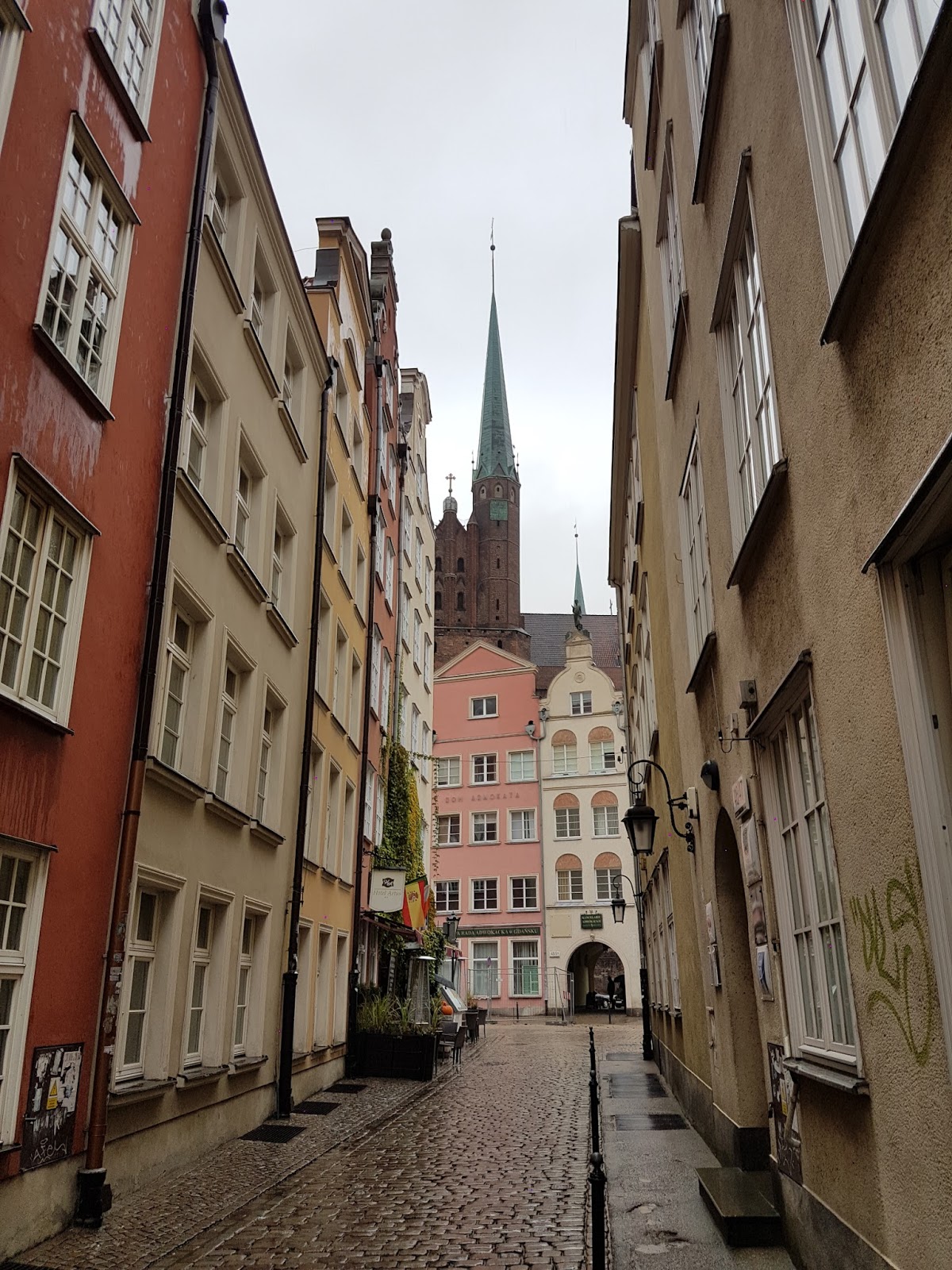
After having a few ideas of doing a long distance walk somewhere in Europe and possibly in Santiago I saw Italy had its own walk called Via Francigena. This pilgrimage route officially goes from Canterbury, England to Rome, however the actual fully mapped and official route goes from the Great St Bernard Pass between Switzerland and Italy all the way to Rome for a total of around 1000km in 40 legs. So the opportunity to walk it came when my brother after graduating decided to do it and asked me to come with him together with one of his friends, Marco. As the whole walk would have taken too much we opted for the last part, so the legs between Siena and Rome. So after preparing a few days earlier with a few hikes of around 20km each we decided to leave on the 6th morning and head to Siena where we would start our walk towards Rome. We took an early train from Vicenza, switched in Padova and reached Florence in less than 2 hours. From Florence, we took a bus and reached the town of Siena at around 12:30. The bus dropped us off at the northwestern part of town, right in front of one of the city gates: Porta Camollia. After heading into town along Via Camollia, we encountered the first little church of San Pietro alla Magione built in the 12th century in a Romanesque style. As it was time for lunch we decided to look for a place in the area and found a small place right after the church called Osteria il Vinaio where I had some really good Pici con ragu di cinghiale ( a type pasta with wild boat meat). After lunch we continued on walking and reached a crossroad where we took a left along Via Vallerozzi which leading downhill took us to the Fonte Nuova d'Ovile, an interesting medieval fountain in a Gothic style. From there we walked back up the same street and ended up in front of the impressive Palazzo Salimbeni, a Gothic palace which hosts the famous Banca Monte dei Paschi di Siena, the world's oldest bank. We then descended via della Sapienza and reached the Basilica of San Domenico. From there we had a breathtaking view of most of Siena, including the Duomo and city hall tower. We then entered the church, which was built in the 13th century in a Gothic style and contains the relics of St Catherine of Siena. From there we descended another street and reached the Sanctuary of St Catherine, which incorporates the house where St Catherine was born. Inside was a nice Renaissance portico with a fountain and a small yet pretty church. Descending yet another street, Via Santa Caterina, i noticed on one of the house walls the symbol of a duck: we were in the Contrada dell'Oca. In fact, Siena is subdivided into 17 Contrade, or districts with each street belonging to one of them; they are very proud of belonging to them and this is quite apparent during the famous Palio, or horse race, where each contrada fights to win the yearly title. Descending the aforementioned street, we reached the Fontebranda, an impressive fortified medieval fountain. We were at one of the lowest parts of the city, so we started our ascent up Via di Fontebranda and reached a great spot where we could have a really nice view of the Church of San Domenico. Walking a little further we eventually reached the amazing and central Piazza del Campo, Siena's main and most beautiful square. Built in the shape of a shell it is surrounded by beautiful palaces and by the Palazzo Pubblico, the town hall, and the Torre del Mangia, the city tower, both built during the 13th century in the Gothic style. At the center of the square stands the Fonte Gaia, another of Siena's beautiful fountains. After looking around the square for a while, we walked up another street, Via di Cittá apssing by some really nice palaces such as the Gothic Palazzo Chigi Saracini. At the end of the street, after a right turn, we finally reached the Piazza del Duomo, with the Cathedral at its center. As the entrance was paid, we decided to just enter through the praying part which left little space to see most of the interior but was still enough to make us awe in amazement at the beauty of this Gothic jewel. Right across from the Duomo is the Santa Maria della Scala complex, once a famous hospital during the medieval times, it now holds a museum and a tourist office which is where we went to have our Pilgrim Passport. This would enable us to use the pilgrim hostels and discount prices along the way, and have stamps from all the places we would stop at. Descending Via san Pietro we reached the church of Sant Agostino with a Gothic exterior but remade in the Baroque style inside. A little further we reached the less known Piazza del Mercato, where the market took and still takes place. The view of the back of the Palazzo Pubblico on one side and of the surrounding countryside on the other was really nice. Walking up another street we reached the Convent of San Girolamo where we hoped to be able to sleep for the night and start our journey the next day from here; unfortunately the kind nuns had no spaces left for the night. We decided to go further up and reached the Basilica di San Clemente in Santa Maria dei Servi which also couldn't host us so we just opted to see the Gothic church inside. From the outside was also an impressive view over the town and looking out towards the Duomo and Torre del Mangia. After a quick break we continued on and through a few streets we passed the Loggia del Papa, a Renaissance loggia built for Pope Pius II, and then reached the pretty church of Santa Maria in Provenzano, buil in the Mannerist style. A few streets behind it, is the Basilica of San Francesco, built in the Gothic style, with an immense room inside. We tried asking the local priest if he had any rooms avaialbe, and he replied he did, though the price was too high and a hotel would have been the same but with better comforts. We finally opted for a small bed and breakfast, called Casa di Osio, which we decided to head to to leave the bags which we were still carrying. The girl at the desk was really kind and showed us everything inside, we left our bags and decided to go out again as my brother's friend would arrive around dinnertime. After walking around town for a while we came back to the B&B and waited for our friend; then headed out as we were quite hungry. We found a nice place called Osteria da Gano where I had some really good pappardelle with meat sauce. After one last walk around town we headed back to sleep as we were planning to get up early the next day and start our long journey towards Rome.
Day 2
The next day, after an early 7:30 wake up call, and a nice breakfast we headed first to Piazza del Campo for a iconic picture and then to the Duomo for another picture in front of the Lupa, or wolf, as it is the symbol of Siena but also of Rome, where we were planning to take it again at the end of the walk. Then we were off, heading out of Siena's southern gate, Porta Romana and into the countryside. After just a kilometer we passed by the Certosa di Maggiano which was one of the first stops for pilgrims but is now a hotel. After a few kilometers across verdant hills we reached the small town of Isola d'Arbia, which havig nonthing worthy to see, was just a quick stop for fizzy water from a public dispenser. Further on we reached the fortified farm, Grancia di Cuna, which used to be a hospital and hospice for pilgrims and then during the 14th century was fortified to protect the grain and wheat from bandits. We walked around it, though it was being refurbished and wasn't really accessible, so then we decided to take a small break drink some water, freshen up a little from the intense September heat and eat some fruit we had carried from Siena. Not too far ahead we passed over a hill overlooking Monteroni d'Arbia, a small town which we had to bypass, and far on the hills the small medieval fortified village of Lucignano d'Arbia with its two medieval towers jutting out among the houses. The walk was starting to get slightly tiring as we passed the 20km mark, up and down some beautiful hills with bucolic landscapes all around and passing another small urban area, the church and houses of Quinciano. From there it was mostly downhill at first and then flat all the way towards the day's final stop: Ponte d'Arbia which we reached after 31 tiring but amazing kilometers. We checked in at the self managed hospice, called Centro Cresti, which worked on a donation basis and was just in the town center which made it easy to reach and to start the walk the day after. After leaving our bags and taking a shower, we went to town to buy a few groceries to cook for dinner as the place had a kitchen we could use. We met some young guys from Verona who also started from Siena but would only walk till Bolsena, a Venetian older man who was travelling from Altopascio, a few days before Siena, a really old man (around 60-70) from Monza who we met during the day who had been travelling from the Great St Bernard Pass and had already walked nearly 700km!!! After dinner, we were really tired and decided to sleep early, as everyone else did, to be able to wake up early in the morning and start the walk. During the night, i woke up to go to the bathroom and to my surprise and disgust found it was full of cockroaches which really grossed me out but still didn't desist me from peeing somehow.
Day 3
After a quick breakfast, the next day we were starting our walk at around 8am. The air was quite chilly so we had to wear a jacket over out t shirts; the view from the hills was really great with a really nice surrounding landscape. After meeting a pair of old men with their dogs on a hunting trip we passed by the group of medieval houses of Serravalle. Afer a few kilometers we entered the town of Buonconvento, a medieval small jewel with surviving walls, and a beautiful historic center. Moving on we walked through some sunflower fields and reached a beautiful hilly area covered in Brunello di Montalcino and Sangiovese vineyards, which we also collected a bit to eat on the way without being caught as they are quite expensive. We passed a few wineries such as the medieval Castello di Tricerchi, a castle surrounded by beautiful vineyards and cypresses trees: a surely typical Tuscan landscape. After climbing up another hill, we reached a completely different setting; all around bucolic gray hills, called Crete Senesi, or siena clays as they are made of a gray colored clay which gives them a lunar appearance; we could even spot the hilltop town of Montalcino with its several medieval towers jutting out among the houses. At one point we encountered an old man blocking the pathway who told us we could continue but to be careful as there was a rally tryout taking place. So walking along the path and moving out of the way a few times when the cars passed we enjoyed a beautiful landscape while also enjoying an intense rally. We then reached the small town of Torrenieri, where we decided to have a sandwich made at the local supermarket with super yummy local cuts. After a refreshing break we were back on track and walking uphill and downhill several times; a few kilometers later we were in view of our day's final stop: San Quirico d'Orcia. Though at eyesight it took a little further to reach, and finally at around 3:30 were at the city center. We went to our accommodation, the parish hostel, which was unfortunately closed until 4:30 so we decided to leave our bags in front, where other people were also waiting and walk around town for a while. We entered the next door Collegiata dei Santi Quirico e Giulitta, a beautiful Romanesque church with interesting decorations on its door friezes and with a few Baroque decorations in the interior. After the hostel opened, we checked in and left our bags and decided to take a shower and wash our clothes to hang while it was still very hot and sunny. We then got back outside and walking along the main street we entered the Chiesa della Madonna di Vitaleta which didn't really have anything special apart from a nice pulpit, and then further on the Chiesa di Santa Maria Assunta built in a nice Romanesque style. Then we visited the Horti Leonini, now a public park, which used to be an italian styled garden owned by a certain Diomede Leoni as his own private gardens but which he also allowed other people and pilgrims to visit, a quite rare thing for the time. The view from there over the surrounding hills was really nice, and we could even see far far away in the distance tomorrow's destination. After buying a few groceries at the supermarket we had a lovely dinner in the hostel with the other guys from Verona and then went to bed ready for the next day which would be much harder.
Day 4
This time we woke up earlier than usual, around 6am, as it would be the longest day yet. We were on the road at 7am and exiting the lovely town of San Quirico heading south, across beautiful early morning views of the surrounding hills. We reached the tiny medieval village of Vignoni Alto, with its stone houses and castle keep. Half an hour later we were in the town of Bagno Vignoni, with its amazing open air medieval hot spring bath. It used to be a famous stop for pilgrims throughout the ages, though nowadays the city council forbids people entering it, but we touched its hot waters nonetheless. Walking onward, we passed by the medieval town of Castiglione d'Orcia which we unfortunately decided not to visit as it would mean we would make this already long day way too long. So we pressed on, walking out in the sun, with only bucolic hills all around, sometimes spotting small farms in the middle of nowhere. After several kilometers we reached a fork which we decided to take in order to visit the Bagni San Filippo, natural springs not too far from the Francigena path. So we walked for about 2km uphill and reached the small town where we decided to have some food and rest a little bit. I ate a sandwich at the Bar la Cascata and then headed down to the open air springs. Due to the calcium carbonate coming out from these sulfuric springs, some wonderful white rock formations have occurred with hot waterfalls flowing all over making this an extremely worthy deviation from the path. After relaxing for around half an hour in the hot springs, we got up and walked back down to the Francigena path and onward towards our day's destination. It was already 4pm and we were getting tired; the path now was mostly uphill and we still had a few kilometers to go. Radicofani's fortress, with its tower jutting out towards the sky, which was even visible from San Quirico, was now more in sight but still looming far away as if to suggest us we were close yet so far away still; in fact it had taunted us all day appearing far in the distance here and then behind hills, trees and towns. 2 hours later we were finally in view of the first houses of Radicofani; the landscape had drastically changed giving way to dry and different vegetation, as well as the animals which now mostly comprised of herds of sheep guarded by big and menacing dogs. We eventually entered the medieval town and immediately headed towards the local parish in which we would be sleeping for the night. We checked in and found out the temporary custodian for those days was a older guy from Vicenza who had to stop his pilgrimage here as he had been attacked by the aforementioned dogs as he had strode too close to the sheep. His leg, he said, was quite badly hurt and he decided to rest here for a few days and in the meantime act as custodian before heading home. After washing our stuff and having a shower we went out to visit the town a little bit before dinner. We visited the main church, the Pieve di San Pietro, made out of black stone as all the rest of the town was med of, and with a nice ceramic decorated altarpiece and then walked through the narrow streets. As it was getting late we didn't make it to visit the fortress, and went back to the accommodation to have dinner with all the other pilgrims, including the Venetian guy which we had met on the other days and two couples, two old swiss and two old germans. After a plentiful meal with lots of wine, we decided to go to bed after such a long day, of about 45km and nearly 11 hours walking.
Day 5
The next day we woke up a little later as we would have less kilometers and we were still feeling the long hours of the previous day. We decided to visit the fortress before leaving, and climbed up the stairs leading to it, It is easy to imagine, due to Radicofani's perfect location, on top of a hill and guarding two valleys with views south and north extending to several kilometers, why this place was always so vital throughout history. During the 14th century, a famous bandit called Ghino di Tacco used to rule over the town, praying on the rich but helping the poor, a sort of Robin Hood of the area. The fortress was still closed as it was too early, however me managed to jump over a fence and enter nonetheless. The view from there was amazing and having the whole castle to ourselves was an even greater experience, We then went back into town where I remembered i forgot my water bottle in the hospice. After getting back on track, we moved on, exiting Radicofani and walking up and down arid hills surrounded by beautiful views and more herds of sheep. After reaching the locality of Ponte a Rigo on lowland, we decided to eat at the only place available, a small bar. I had a big sandwich will luckily filled me up and also got some coke to fill up with sugars. We then walked for several kilometers through fields of corn and wheat, and then slightly uphill, through some well accepted wooded areas which covered us partly from the hot sun. Towards the end of our day's walk we encountered a group of three women, one from the US one from Colombia and one from Brazil which told us they met in Santiago the year before and were now doing the walk to Rome too. After talking for a while we decided to speed up as they had a shorter and slower pace than ours and waved goodbye. 30km from Radicofani we finally reached our destination for the day; the town of Proceno. We had left Tuscany and were now in the region of Lazio; at first we had intended to sleep in Acquapendente, a few kilometeres to the west, however the accommodation there was full so we had opted for the suggested alternative route to Proceno. At first we tried at the local parish which unfortunately did not not host anyone, so then we tried with the second option, the house of the pilgrim. There they answered positively and we were hosted inside the town hall, Palazzo Sforza, a 16th century palace basically all for ourselves as were the only pilgrims there, since the 3 women we met were staying at a hotel instead. We even had an incredible view over the whole town from the balcony including the town's main landmark, the medieval castle. For dinner we opted to eat at a a local restaurant, which was owned by the same owner of the castle, a nice older lady who talked about her possession and about the town itself. We also met the three women who were apparently staying in the castle hotel and also eating at the same place as us for dinner. After a nice dinner we headed back to our accommodation to sleep.
Day 6
We left Proceno, early, at around 8am and traveled through some wooden areas down a hill and then up another until reaching the town of Acquapendente nearly 2 hours later. We crossed the town and had a quick stop at a bar to have breakfast; we then reached the eastern end of town where we entered the Church of the Holy Sepulcher, called so because it was built like the one in Jerusalem. Though Baroque, it still contains an interesting Romanesque crypt dating to the 11th century. The walk continued without much to see until the town of San Lorenzo Nuovo, a town built in the 18th century because the older part was located in an unhealthy area near the lake. We decided to have lunch here and opted for the first place we encountered, called Lo Spuntino, where I had some really good cannelloni. We then crossed the hexagonal central square and exited the town heading on towards our destination. Finally we were in sight of Lake Bolsena, with its typical volcanic character, with steep hillsides surrounding it and an extremely perfect climate, with light breeze and sun. Walking on we passed by peaceful olive groves always overlooking the clear and inviting waters of the lake. However right before reaching the day's stop we saw a storm that was fast approaching, the first in all the trip. We decided to speed up and not be caught out in the open, as soon as we reached the town in fact it started pouring, just as a summer storm does. We managed to cross the town rapidly and reached the accommodation we planned to stay at: the Istituto Suore del Santissimo Sacramento. The nuns showed us the main room where we were set up with a mattress on the floor with all the other pilgrims, among whom we recognized most of those we already met along the way. The mattress on the floor thing did not bother me much but rather the suggested donation of 10 euros which we basically couldn't contest, and I though that was a bit too much for such a spartan sleeping situation, especially comparing the previous night where we had spent the same amount but for a whole palace for ourselves. After setting down our stuff, we had a shower and then went out as the rain had stopped. Right across from our accommodation, we visited the Collegiata di Santa Cristina, a mix of Romanesque and Baroque features with an interesting cave-chapel with 15th century frescoes. We then walked through the narrow and pretty medieval streets, reaching the castle dating to the 12th century and overlooking the town. At one point my brother and his friend decided to head back to attend the church with the nuns and other pilgrims while i preferred staying in town and exploring some more. I guess i made a good choice, because i certainly enjoyed sitting on a bench overlooking the lake and watching an amazing sunset. We then decided to have dinner close to our sleeping place, in a fast food pizzeria which had good pizza slices of all kinds. After that we headed inside the convent and went to sleep early as we were still tired from the previous days; in fact even today we had managed to walk another 30km.
Day 7
The next morning after an early wake up, we headed down towards the lake as we didn't have a chance the previous day. The sun was out again, and there wasn't anyone around the lake shore as it was still pretty early; the only beings there were several ducks having a nap. I decided to dip my legs in the cold waters and while eating breakfast made up of mostly fruit, I also shared some of my grapes with the sleepy ducks. Getting my shoes back on we started the day's trip by heading south along the lake shore. We walked mostly uphill through several olive groves with splendid view over the lake and with clear blue skies. At one point we entered a wooded area full of rivets and refreshing shaded areas from the scorching heat, the area used to be an etruscan area and there were still some ruins here and there. Our guidebook said though that the water here wasn't very drinkable due to the high amount of sulfur from the volcanic springs. We then reached an incredibly preserved part of the roman road that used to pass here and was later used by the pilgrims travelling on the Francigena during the middle ages; it is amazing how the same path is now used by modern pilgrims such as ourselves. After walking on we eventually reached the outskirts of the town of Montefiascone, we stopped at a local supermarket to buy some groceries and sat on the curb of the road to eat some sandwiches before heading into the town itself. We reached the city center at around 3pm but it was still too early to check in at our accommodation, so we left the bags at the convent, and strolled around town for a while. We then climbed up to reach the highest point of the town, where the Papal Castle was located with an incredible view over the whole Lake Bolsena. Unfortunately we did not look at the sky and a sudden rainstorm hit us. We hid under the only thing which could kind of cover us: the kid's playground structures. After around 15 minutes, the storm was over and the air was much chillier, we headed out from our hiding and walked around town some more to explore. We visited the Cattedrale di Santa Margherita, with a beautiful Renaissance interior, and one of the largest cupolas in Italy. Further on we passed the small yet pretty squares, Largo del Plebiscito and Piazza Vittorio Emanuele, and then reached the Basilica di San Flaviano, a unknown jewel of Romanesque architecture with many frescoes still remaining dating to the 11th century. After that we were ready to have dinner and opted for a place called Ristorante Borgo Antico which had a pilgrim's menu which offered several local tasty dishes. After dinner we headed to the convent, where the Benedictine nuns showed us to our sleeping places, we met yet again most of the pilgrims we had seen throughout our journey, and went to bed happy that this day was not as hard as the others with just 20km.
Day 8
We left the convent at around 8am and had a quick breakfast at the bar on Montefiascone's main square. After leaving town we descended downhill and reached an incredibly preserved roman road on which we walked for nearly 3km!! The road then gave way to countryside paths through fields and small patches of woodland. Several kilometers later we reached the Terme del Bagnaccio, some open air hot springs near the city of Viterbo. Entrance was free for us pilgrims so we decided to relax a little bit and enjoy the really hot soothing waters. We also met other pilgrims we knew relaxing there however they just stayed for a few minutes. We remained for nearly two hours, then we decided it was time to head on a finally reach the day's destination: Viterbo after only 22km. I decided to save some money by heading to the supermarket and buying some bread and cuts to make sandwiches while my brother and his friend decided to head into the city and have lunch there. After having my lunch in the public park right outside the city center, i entered the city through the northern gate, Porta Fiorentina. Viterbo is known as one of the medieval jewels of Italy as it still retains most of its medieval architecture throughout, including churches, walls, and a whole medieval neighborhood. It used to be also the seat of the Papacy for two decades in the 13th century and is know for its many beautiful fountains found all around the city. The first fountain I encountered, called Fontana Piazza della Rocca, dates to the 16th century and stands in front of the Rocca Albornoz, a castle-palace dating to the 14th century. In the nearby square of San Faustino i passed by the medieval fountain, and then reached the site of our accommodation, which was in a former medieval tower behind the Church of Santa Maria della Trinitá and behind an english elementary school. After washing my clothes and having a shower, my brother and friend came back and did the same and then we were ready to explore the city further. We walked down a street and reach an incredible panoramic point which overlooked the fortress like Papal palace, one of the city's main sights. We then walked uphill on the other side and reached the pretty central square, Piazza del Plebiscito. It is surrounded by several buildings including the 15th century clock tower, two palaces: Palazzo del Podestá and Palazzo dei Priori now the city hall. We entered the courtyard which had a beautiful view over the town below and a nice 17th century fountain. Back in the Piazza, we admired the column holding the lion, symbol of the city of Viterbo. We then walked to another Piazza, Piazza del Gesú, with yet another fountain and further on, the Piazza della Morte also with a fountain at its center; the Fontana San Tommaso. The square is called so because the nearby church of San Tommaso provided burials for those that couldn't afford them. Not too far on we reached the beautiful Piazza San Lorenzo, with the Cathedral on one side and the Papal Palace on the other. The palace is famous for holding the longest papal conclave in history which lasted 1006 days. This is in fact when the name conclave, cause cum clave, or closed by key, forced the cardinals to a decision as they were locked inside with no food or drinks. The Palace dates to the 13th century and with a beautiful loggia overlooking the town and valley below. We then entered the Cathedral, which despite its Renaissance facade, still maintained a Romanesque interior and bell tower. Walking back towards the city center we crossed through the amazing medieval quarter, with splendid stone houses, towers, arches and narrow streets. Moving onward we stopped at the Fontana Grande, located in another central square; Piazza Fontana Grande. We proceeded to then visit the Church of Santa Maria Nuova, built in the Romanesque style in the 12th century and then walked back through Piazza del Plebiscito, passed by the Fontana di Santo Stefano holding four lions, and reached the northern part of the city where the neoclassical Church of Santa Rosa was located. It was starting to feel like it would rain soon so we decided to head back to the accommodation; in fact just as we reached the place, another summer storm hit us but luckily we were already inside. For dinner, I decided to just eat the leftover sandwiches I still had, while my brother and his friend decided to eat out again. I guess I then fell asleep, because I basically woke up and it was already the day after.
Day 9
The next day we woke up a little later and left the city around 8:30, passing trough the western gate; Porta Faul. We followed the street, Strada Signorino, which then became Via Cava Sant'Antonio. This was an amazing road built through the tufaceous rock present all around the area; this path was built 2500 years ago by the Etruscan people inhabiting the area. It stood nearly 10m high and went on for several kilometers: it was truly amazing and felt like nothing i had ever seen before. Getting out from the etruscan path it was then fields and small forests till the next destination: Vetralla. Even today we fortunately had to walk a small way, around 20km. Once we reached the town we decided to head immediately to the Parrocchia San Francesco, our accomodation for the night. We had laughed all day thinking how the older guy from Monza we had met throughout our journey had told us for many days how the legs throughout the Francigena way were just stupid and would make you walk more kilometers than you would normally. He said he just wanted to skip the towns, and walk straight along the trafficked Via Cassia which he said was much better. We were imagining him, praising the straightness of such road and just bypassing all towns and natural beauties he would see and only thinking of reaching Rome as soon as possible. After reaching the convent of San Francesco we met the cool custodian who showed us to our room where we met the Venetian guy and another one from Arezzo which we had met on the previous day; then he announced we would have lunch altogether. So we headed to the kitchen and ate a plentiful meal with local specialties all cooked by the Ukrainian guys working there (we guess they were some kind of criminals that were rehabilitating into society or something like that). After lunch we headed out to explore the small town of Vetralla; we walked along the town's main street, also called Via Cassia as it basically was the old roman road that connected Florence to Rome. We then tried to see the main church of San Andrea, but a funeral was taking place so we opted to move on. We then reached the small tourist office where we got our stamps for the pilgrim passport and spoke a little about our journey to a girl working there. Then we walked out of town in the middle of the fields to take a panoramic shot of the town. From there we walked back into town and admired the medieval walls with its civic tower jutting out. After another plentiful dinner in the parish, we went to bed full and satisfied.
Day 10
The next day breakfast was also provided by the parish, as basically the whole food they were cooking and preparing was donated by local shops so as not to be thrown away. We were really glad we had spent the night here and wished all stops were like this one all along the Francigena way.
We then left relatively early, though the weather wasn't as good as the previous days; in fact it started out as quite cloudy which then became light rain. We crossed a really nice forest for several kilometers and then came out into a beautiful area full of hazelnut trees, which we found out provides hazelnuts for the nutella factory in Piedmont. We then passed by the so called Torri d'Orlando, or two towers jutting out in the middle of the countryside, one of them is a ruined medieval tower while the other is actually an old roman mausoleum which is still quite well preserved and reaches a height of 15 meters, Moving on we passed among more hazelnut trees, where I decided to collect some fallen nuts to eat later. After a few kilometers we reached the town of Capranica; here we decided to head to a supermarket and buy food to make sandwiches out of. We then crossed through the historical center, passing under the Sant'Antonio gate and then under the clock tower, crossing the whole pretty town and then descending back down on the path. The path led us through a thick yet beautiful forest, there was small water rivets running throughout, a light haze and many trees which looked tropical made us feel like we were in a tropical rain forest. After a few enjoyable kilometers inside, we came out of the forest finally reaching the town of Sutri, 28km later. This time we weren't able to find any pilgrim accommodation so we had to rely on a cheap hotel which offered us a nice deal; Hotel Sutrium. So we went there, checked in and finally took a shower in the first real bathroom of the trip. We felt like kings even though it was only a two star hotel and would have looked less than average on a normal day. Once ready, we headed out to explore, and walked through the town's main square, Piazza del Comune with a nice monumental fountain and the clock tower, the clouds had finally given in to a splendid sun which made the stroll even better. We reached the town's main attraction: a tufaceous hill which used to be an ancient Etruscan city. Here we paid the price to enter the archaeological area which featured the most amazing Roman amphitheater i had ever seen after the one in Rome. This one was however completely different and wholly built inside the rock. Next to it, the hill was surrounded by Etruscan and roman tombs built inside the rock and finally we also visited an ancient mithraeum, or temple dedicated to the god Mithras, which was later converted to church during the medieval times and still featured frescoes representing pilgrims on the via Francigena. After exiting the archaeological site, we headed back into the medieval town and went to visit the Cathedral; mostly rebuilt in the Baroque style it still featured some medieval details. For dinner we decided to eat behind the Cathedral at a place called Il Vescovado where we had an excellent meal for a decent price, we then happily discovered that on that same night the main event of the year, the procession of Santa Dolcissima would take place, moving a great group of people from the Cathedral around the town streets along with fireworks and lots of partying. We had been a bit disappointed throughout the journey as we either had arrived too early or too late to each town for their local festivities but we finally had the chance to participate in the one offered by Sutri. So we stayed out for a while but then decided to head to sleep as the next day we had some more kilometers to walk.
Day 11
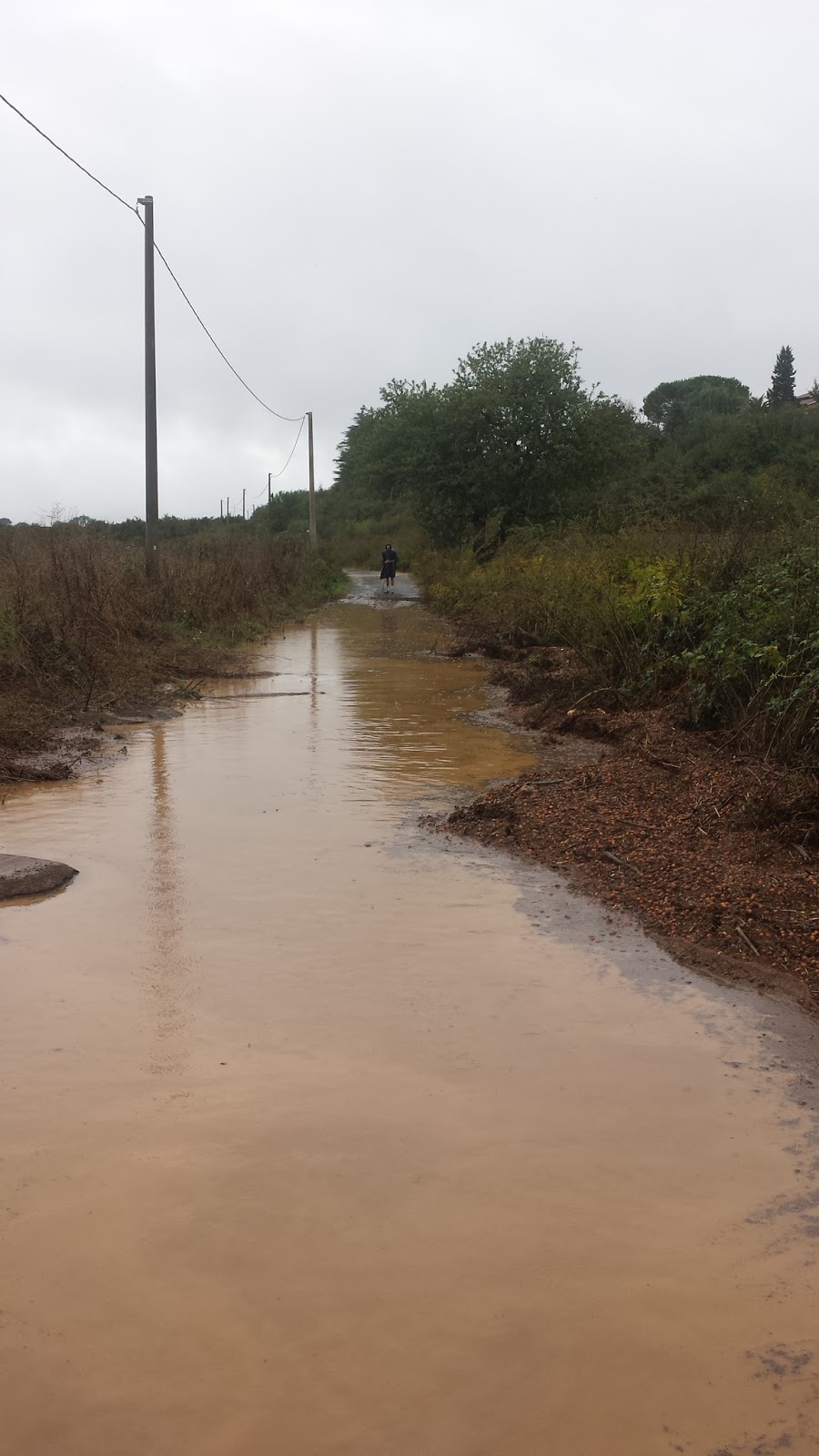
After getting up to a rain storm we decided to start walking as the rain didn't seem to stop. We figured out this day became the worst day so far weather wise; in fact due to the past rainy days and today's strong and continuous rains, the nearby areas had flooded creating rivers running over roads. After reaching our first flood (we had hoped it would be our only one) we figured we could somehow cross it and not get wet. Oh how wrong we were! In fact as soon as i started walking in the water, the water level reaching just below the highest part of the shoes, a car decided to pass by, which had stood still so far, and creating a wave that made my shoe fill with dirty and muddy water. Cursing back at the driver, i proceeded to head out of the water and try to save the unsavable; in fact, as my shoes were waterproof the water that actually got it managed to stay in keeping my feet drenched. After walking a partly unflooded area we encountered another river; this time it seemed like the only way was to walk through it; however it was too deep and we ended up getting wet all over again. After passing by a golf course, we encountered yet another flood but this time managed to jump over it as it was relatively small. We then reached the first town of the day; Monterosi, here we decided to eat lunch by grabbing some pizza slices and focaccias at a local bar. The owner told us some other pilgrims had also stopped here, and because of the floods, decided to take a bus to the day's destination. We, as real pilgrims would, decided not to rely on public transport and instead walk all the way. Luckily, right after town, the sun came out again and we finally reached a relatively unscathed area. We crossed some fields and eventually reached the Cascate di Monte Gelato, a series of waterfalls which from the pictures looked very nice and peaceful but now with all the rain, looked menacing and dark brown. We stopped to take a few photographs nonetheless, and then proceeded on towards our destination. At 29km from Sutri we finally reached the town of Campagnano di Roma, really tired and wet. As soon as we entered the old town, my brother's shoes which had somehow managed so far, eventually broke making him switch to flip flops for the last remaining part, as our night's accommodation was located on the other side of town. So we managed to cross through the town, passing by the main church, Collegiata San Giovanni Battista, and then crossing the main square with the nice baroque dolphin fountain. After reaching the parish, we were shown to our beds, where all the other pilgrims were already settled in, we found out we were actually the only ones that decided to walk all the way while all the others had taken the bus instead. We found a room just for ourselves, washed our wet clothes, then washed ourselves and headed into town to buy new shoes for my brother. We then decided to have dinner at home after finding a nice small pasta shop which cooked some homemade lasagne to take away. They were pretty cheap and filling. After a nice meal we headed into bed still tired but not wet anymore.
Day 12
We woke up early and luckily the sun was out. We started out walk downhill past a nice neighborhood and then trough a nice and peaceful wooded area which led us to the solitary Sanctuary of Madonna del Sorbo, a medieval church in the middle of the forest sitting on top of a hill. After a quick break eating some fruit right outside the church, we moved on, passing through more forest area and some farms that hold horses. After a little while we reached the town of Formello, we stopped rapidly to eat some pizza slices, focaccia and olive bread, and then entered the old town. Here we also met an italian politician with a group of friends who decided to do a daily walk towards Rome. We then visited the main church, San Lorenzo, with a nice interior, and then city hall which hosted a small museum and a panoramic point on top of its medieval tower with an exposition dedicated to the via Francigena. The view from the top was really nice, and we could somehow spot some silhouettes in the far horizon, probably buildings in Rome. We then went back down and walked across the town, then walking among some fields we encountered a small fence which we proceeded to open and cross as suggested by the guide. As we were walking along a field, at one point I heard screaming behind me, and turning around I suddenly realized a humongous wasp was attacking our friend Marco. The wasp stung him twice, once on a finger and the second on top of his head; as soon as I saw the wasp, I started running without stopping and luckily did not notice another huge nest was right beside me; two fast approaching cyclists were also stung, and that made me panic even more, until I finally exited the area and felt a little safer. Our friend had his finger and top of the head swelling and we were highly considering in calling an ambulance, he reassure us it was ok and would make it until the next town to find a pharmacy. We had entered the regional park of Veio, a beautiful area, if not for the wasps, that used to be the site of the ancient Etruscan town of Veio, then conquered by the Romans in the 4th century B.C. After walking among its ruins and woods, we encountered some other wasps, and this time tended to stay far away from their nests. At one point out of nowhere a huge hawk decided to fly out of its tree and scare us even further, contributing to the numerous animals we had encountered so far and so close to Rome, including a family of wild boar. After the park we reached the Cascata della Mola, a small yet pretty waterfall where we dipped our feet into the fresh water to refresh ourselves. We then met the park rangers, to which we reported about the wasps, and they sounded surprised when my friend told them he had been stung twice, as they said three times could have been enough to kill you (though i highly doubt it). After walking a little more, we finally reached our accommodation at the nuns of the Istituto Poverelle in La Storta. We met the other pilgrims and found out a woman we had met earlier had also been stung; she was a nurse and had some cortisone to share with our friend. After leaving our stuff, we went to the supermarket to buy food for dinner. We had some good food from the food counter and went back to the nuns convent to have dinner some time later and then to sleep.
Day 13
Last day on our trip; we decided to wake up at 5am in order to reach St Peter's square my midday at attend the Pope's Angelus prayer. So after leaving with darkness we fast approached the last wild area on the outskirts of Rome: the Riserva dell'Insugherata. After walking through the woods and fields, light was starting to appear as the sun was rising, however at one point a huge black shadow darted across our path just a few feet from me, as I was the one at the head of the group. We stood still, paralyzed from the fright, as suddenly realizing that shadow was a huge boar, probably as big as two large dogs, and had it been a few seconds later, I would probably be without one leg. Hurrying on and making noises to keep any possible wild animal away from us, we finally reached an urban area. We had finally reached Rome. After crossing the modern northwestern neighborhoods we reached the famous park of Monte Mario, from which at its highest spot we could finally see the Basilica of St Peter; we were so close to our destination! It was still 9am so we decided to have breakfast after descending the hill, and then at around 10am we were finally in the Vatican. We then headed to the Centro San Lorenzo, the pilgrim hosting center, where a really nice old lady from Northern Italy let us drop our bags indefinitely, gave us the Pilgrim diploma for completing our walk and gave us useful info. We then headed to St Peter's square where we eventually attended the Angelus and saw the Pope peek out from the window. After the ceremony, we decided to head inside the Basilica and visit it. There were so many people, as it is common, but still its beauty still struck me notwithstanding the amount of people. After visiting the church we then went to walk around town, to see a few things which we hadn't seen on our previous visits to Rome, and seeing other places we had already seen but which our friend hadn't. We then took the ritual photo in front of the column with the wolf next to the Campidoglio overlooking the Roman Forum. After visiting the city we went back to grab our bags and head to our accommodation, the Hospice managed by the Confraternity of Santiago. There we met all the other pilgrims who like us had completed this long yet satisfying jounrey. The next after visiting some more of Rome we eventually took the 6pm train fast train that finally took us back hom in Vicenza in time for a later dinner
 |
| View of Siena |
 |
| Siena Cathedral |
 |
| Photo in Piazza del Campo |
 |
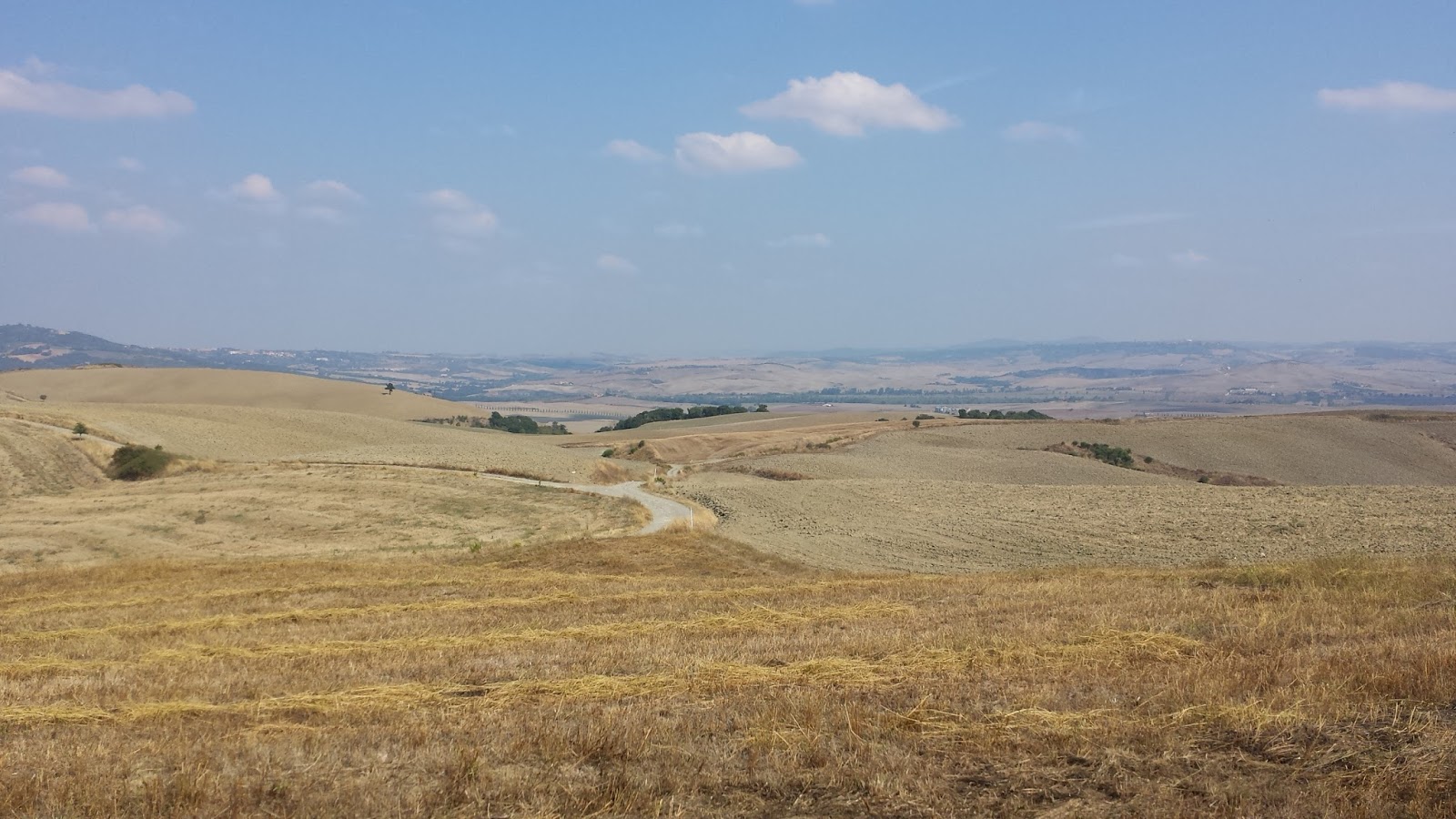
| The countryside around Siena |
 |
| Countryside around Buonconvento |
 |
| View of Buonconvento |
 |
| The vineyards of Sangiovese and Brunello di Montalcino |
 |
| Tuscan landscape |
 |
| The church in San Quirico d'Orcia |
 |
| Bagno Vignoni |
 |
| The hot springs pool in Bagno Vignoni |
 |
| Tuscan landscape |
 |
| Cows in Radicofani |
 |
| Radicofani |
 |
| Radicofani's tower |
 |
| Countryside around Radicofani |
 |
| A street in Proceno |
 |
| View of Proceno |
 |
| Castle of Bolsena |
 |
| Bolsena |
 |
| Sunset from Bolsena |
 |
| Olive trees and Lake Bolsena |
 |
| Roman road between Bolsena and Montefiascone |
 |
| Countryside between Montefiascone and Viterbo |
 |
| View of the Papal Palace in Viterbo |
 |
| View from the city hall terrace in Viterbo |
 |
| The medieval quarter in Viterbo |
 |
| The Etruscan path near Viterbo |
 |
| View of Vetralla |
 |
| The roman amphitheater in Sutri |
 |
| View of Sutri |
 |
| The Etruscan and Roman tombs in Sutri |
 |
| The flood between Sutri and Campagnano di Roma |
 |
| View from Formello's tower |
 |
| Finally in St Peter's Square, Rome |
 |
| View of Rome's Castel Sant'Angelo |