Sunday, January 29, 2017

Benevento (18/08/16)

We left Salerno at around midday and reached the town of Benevento 1 hour later. I really wanted to see the city since the beginning of the holidays, as it used to be a really important Roman city and then Duchy during the middle ages. Once called Maleventum, or bringer of bad events, the romans then changed the city's name to Beneventum, meaning bringer of good events. So after finding a parking spot, we headed into town on foot by reaching the eastern end of the city center. The first sight we came across was the Rocca dei Rettori, or the local castle; it is composed of the main keep, which dates to the Longobard period with later additions and still features roman tombs and inscriptions utilized as stone to support it, and the palace dating to the 16th century. We then continued on, walking along the town's main street: Corso Garibaldi. We walked past the Church of Santa Sofia which we decided to visit later, and continued on along the main street, stopping in front of the beautiful Egyptian Obelisk located on Piazza Papiniano, with all the hieroglyphics still visible. The obelisk comes from the destroyed Temple of Isis, built during the reign of Emperor Domitian in 89 A.D. and was set on the Cathedral square in 1597 and moved to the current location in 1872. We were starting to get hungry so we decided to look for a place to eat; we eventually found a nice looking place called Ristorante Pizzeria Traiana, which had a lovely outdoor eating area overlooking the beautiful roman arch. After a nice lunch, we decided to take a closer look at the arch; the so called Arch of Trajan, was as the name suggests, built during Emperor Trajan's reign between 114 and 117 A.D. It is considered to be the best preserved roman arch in the world as it was incorporated in the city walls during the medieval times as the Golden Gate. It was really noteworthy with scenes of peace looking towards the city center, and scenes of war looking outwards. We then moved on, and got back on the main street heading west. We passed by the Cathedral which was still closed for lunch, but managed to see the Fontana delle Catene, or Fountain of the Chains, located in the Cathedral square and built in 1705. Not far, we passed by the ruins and foundations of the roman forum and then passed under yet another roman arch called the Arco del Sacramento. After a few wrong turns we reached the entrance to the Roman Theater; the cost for the tickets was 2 euros full price and 1 euro for students. Built during the 2nd century A.D. it is still quite well preserved, despite during the centuries its stones had been used to built houses and buildings and most of its outer and lower arches are still standing and quite impressive to look at. After visiting the theater we went on and reached the western end of the city where the Ponte Leproso, or Leper bridge a roman era bridge still stand across the Sabato river. After that we started heading back towards the city center, and stopped to admire the beautiful Bue Apis, a statue of a bull coming from the destroyed Temple of Isis and now standing on Viale San Lorenzo. Then heading back into town we reached and entered the Cathedral, which had reopened. Unfortunately, the building had been bombed during WWII and reconstructed in a modern style. Only the facade was able to survive and is a beautiful example of Romanesque architecture. The medieval door is also still remaining, though its pieces had to be put back together as it was also damaged; called Janua Major it as beautiful example of 12th century door with incredible panels detailing Jesus's life and other stories. Once inside, we went to see the small yet interesting museum, located in the crypt downstairs which shows the original arches and decorations which survived the bombing. There several fragments of medieval inscriptions and even some frescoes still remaining. Finally we headed on and entered the Church of Santa Sofia, inscribed in the Unesco World Heritage Site list as part of the Langobard heritage in Italy. The church is quite small but its nonetheless interesting as it is in the form of a hexagon and hold some beautiful columns maybe coming from the Temple of Isis; as well as still holding some 8th to 9th century frescoes here and there. In the church's monastery complex and cloister was the Museo del Sannio, an interesting archaeological museum holding artifacts from the Sannio area dating from the greek and roman times, passing through the middle ages and Langobard period all the way to 16th and 17th century paintings. Furthermore the cloister itself had amazing columns dating from the 12th century all richly decorated with scenes depicting humans and animals alike. After our visit it was time to go, so we headead back to the car, and drove home happy after a nice day visiting.

The Rocca dei Rettori

The extent of the Duchy of Benevento

The church of Santa Sofia

The Egyptian obelisk

The Arch of Trajan

The Roman theater

The Bue Apis statue

Detail of one of the columns

The peculiar columns of the cloister


Sunday, January 22, 2017

Certosa di Padula and Teggiano (13/08/2016)

On this day we decided to head south from Salerno and visit the Padula Charterhouse. It is considered to be the first charter-house built in the Campania region, and the largest in the whole of Italy. Together with Paestum (which I had already visited), the Cilento National Park and the greek and roman city of Velia it is inscribed in the Unesco World Heritage Site list. Construction on the building started in 1309 and was protracted till the 18th century, with most of it dating to the later period due to alterations and reconstructions. So we left Salerno after lunchtime and reached Padula around 3:30pm, with an hour and twenty minutes drive. We parked the car and headed on foot towards the entrance, located on the southern side. We crossed the main courtyard, sided by the stables, granaries, and other buildings that hosted all kinds of shops, and reached the main facade. Dating to the 16th century in a baroque style, the facade is probably one of the most noteworthy features of the whole complex. Once we passed through the entrance we bought our tickets (4 euros full price and 2 euro for student discount) and were given a map of the complex, as it is really large. From there we followed the suggested path, passing through the first cloister called Chiostro della Foresteria, because it was adjacent to the guest lodgings, which had a nice fountain at its center and then entering the church. The interior, dating to the 17th century is a joy of the neapolitan baroque with beautiful decorations, colorful paintings and lavish marbles. We then went through several rooms which included the Hall of the Bells, the Hall of the Chapter and the Hall of the Treasure, all with beautiful baroque decorations. Next was the cloister of the old cemetery and right next to it, through a door, the large Refectory which used to serve as the dining room of the monks. After that we entered the Kitchens, a beautifully preserved example of cooking space (which rarely survives in charterhouses and monasteries) with a huge furnace and chimney at its center and maiolicas decorating the walls. Right beside, through a door, is another cloister, this time very small and in the shadows as it still maintains its 14th century style and architecture. Following the map we reached what were once the Prior's rooms. now housing the Archaeological museum with ancient greek vases, weapons and other objects. There were also two cloisters, the so called Chiostro dei Procuratori and the Prior's cloister which is more like a small italian garden with trees and fountains giving it a peaceful and beautiful setting. Moving on we reached the Great Cloister, an immense rectangular (104x150m) with two floors on all sides and containing the monks' cells. It is in fact the largest cloister in the world, and took us quite a while to walk from one side to the other. We were done visiting so we headed back through the complex and out to the car. It was around 6pm and we decided to go to the nearby town of Teggiano as on that same day they were having a Medieval reenactment which we decided to see. So parking the car outside the historic town and taking the mandatory bus up the hill, we reached the city center. Before the actual fair started we decided to enter the two main churches on the central square: the Church of St Francis and the Cathedral. The first had an interesting baroque interior with some medieval frescoes still remaining, while the Cathedral, also baroque, had several medieval tombs and a beautiful Ambon dating to the 13th century. Exiting the church, we joined the multitude of people, standing to watch the parade start, with many people dressed in medieval costumes, dancing, singing and performing all along the streets. When the parade ended we decided to walk further on through the narrow streets, and ending up in another square overlooking the beautiful valley down below surrounded by mountains. It was getting time for dinner, and each neighbourhood, or rione, was setting up a open air food court on small square around town so we decided to look for a nice one to have dinner. We settled for the Wolf tavern which served excellent boar meat. Then after dinner we went back to the main square and saw the firework show which ended the day and the festival in a great party atmosphere. After that it was time to head back as we still had an hour and a half to go home in Salerno and rest after a great day.

View of Padula

The entrance to the charter-house

Interior of the church

The Refectory

The kitchen

The Prior's cloister garden

The Great cloister, the largest in the world

View of the town from the cloister

The parade in Teggiano with the castle in the background

Medieval costumes

One of the many churches in town

Knights taking a rest after the parade


Thursday, October 20, 2016

Praia a Mare & Maratea (12/08/2016)

We decided to go on a day trip to the beach town of Praia a Mare, located on the northern part of Calabria, about 2 hours drive south from Salerno. We decided to leave around 9am, and following the highway southwards, we reached the beach at around 11am. I had been here in July before, so I had looked around for nice beach locatatios; I then believed Buddha Beach would suit perfectly my mom and dad's resquests. Though quite expensive (about 20euros for an umbrella and 2 beach loungers) it was much better than the surrounding ones which were much closer to each other and filled with kids. It greatly reminded us of the beaches in Spain and so my dad was really happy, plus the view was amazing, with the Dino island jutting out from the water right in front of the beach. After dropping out stuff at the umbrella, my brother and I decided to swim towards the island and explore its waters and coastline. The water was crystal clear and there were many fish species and interesting plants all around; we also found out an amazing sea cave that went deep under the island and managed to swim in it for a while before other people started arriving and we decided to swim on. After the swim we headed back to our beach lounges and decided to rest and sun tan for a while. Included in the price were some drinks, so my dad and I decided to have mojitos while enjoying the late afternoon sea breeze. After much relaxing we decided to get back in the car and head towards Salerno stopping in the town of Maratea along the way. Only 30 minutes away from Praia a Mare but already in another region, Basilicata, the town of Maratea sits on top of cliffs overlooking the sea. At its highest point on Monte San Biagio at 623m stands a 31m statue of Christ the Reedemer built in 1965 by Bruno Innocenti with Carrara marble. The ticket cost 3 euros (which I though was quite stupid because you were basically paying to walk on a mountain) but the view was amazing, with sea cliffs looking north and southwards and it was particularly great at this certain time as the sun was just setting behind the horizon. After a great sunset we got back in the car and headed back towards Salerno feeling very hungry but definitely happy for this relaxing day at the beach.

Buddha Beach in Praia a Mare

Sunset from Maratea

The coast south from Maratea

The statue of Christ the Redeemer

View of the statue

Thursday, October 13, 2016

Amalfi Coast Boat Trip (05/08/2016)

We decided to take a boat trip from Salerno, along the Amalfi coast, as the weather looked very nice and we were hoping to go without having to take our car along the narrow and winding roads of that area. We left the house quite early and headed along the Lungomare Trieste where we decided to rent the boat. We took a slow but cheap Gozzo, which used to be the typical fishing boat of the area, and now serves as a typical cheap but manageable rental boat. We all then boarded the vehicle and left the coast of Salerno heading west towards our destination. We passed by the towns of Vietri Sul Mare with its impressive houses right above the cliffs, Raito and Cetara (all of which I had previously visited on foot). Then continuing on we went past the village of Erchie with its tower and stone mine and went around the cape an uninhabited and probably the best part of the whole Amalfi coast. Here the cliff are really impressive, reaching almost a few hundred meters, and there are no towns apart from some sporadic medieval Saracen towers that once guarded the way from pirate attacks. We spotted a sea cave and decided to stop our boat and explore it; after swimming for a while and reaching the cave we found out it went all the way inside the rock and the end wasn't really visible, so we decided to head further in through the partial darkness and find out how long it actually was. My brother wasn't really sure and told me to stop three quarters of the way; he was kind of right as the place was getting really dark and the current quite strong so we decided not to risk hurting ourselves. While heading out we spotted a small boat trying to get in the cave and we waved it off saying it wasn't legal to enter with a vehicle (apparently most people don't care and continue to do so resulting in a foul gas smell and not crystal clear water inside the cave). Once out we swam along the cliff side looking at the many fish and plants dotting this side of the sea and we were quite amazed yet scared too by the depth the cliff actually went down underwater. After getting back on the boat we pulled the anchor up and moved on, reaching and passing the towns of Maiori, Minori, Atrani, Amalfi and Ravello on top of a high plateau. We then reached another cape, where the small village of Conca dei Marini is located; we found a perfect small bay where we anchored out boat and decided to take another swim. We took our snorkeling masks and decided to explore the waters around it; the water was amazing and crystal clear and we spotted so many different types of fish and several starfish too, one of which we took up to take a picture of and then swam to put it back. After a refreshing swim we got back on boat and started to head back home as the whole 27km journey would take around two hours. In fact about two hours later we were in Salerno, where we left our boat at the boat rental and headed home to take a shower and relax after this awesome day.

View of Vietri sul Mare

View of Cetara

Beautiful part of the coast

A medieval tower
 
Another view of the coast

View of Amalfi

A starfish


Wednesday, October 5, 2016

Abruzzo & Molise (30/07-01/08/2016)

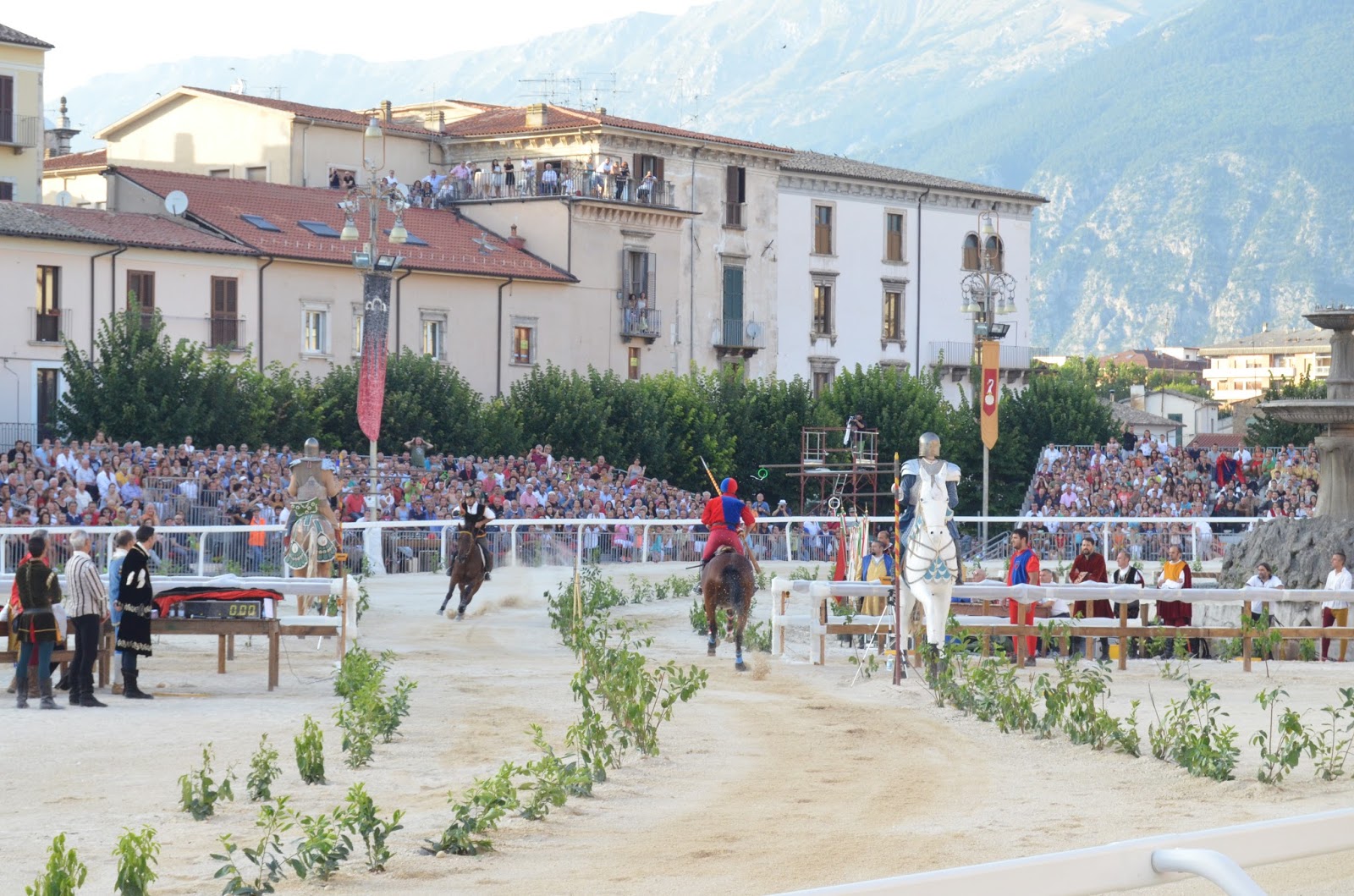
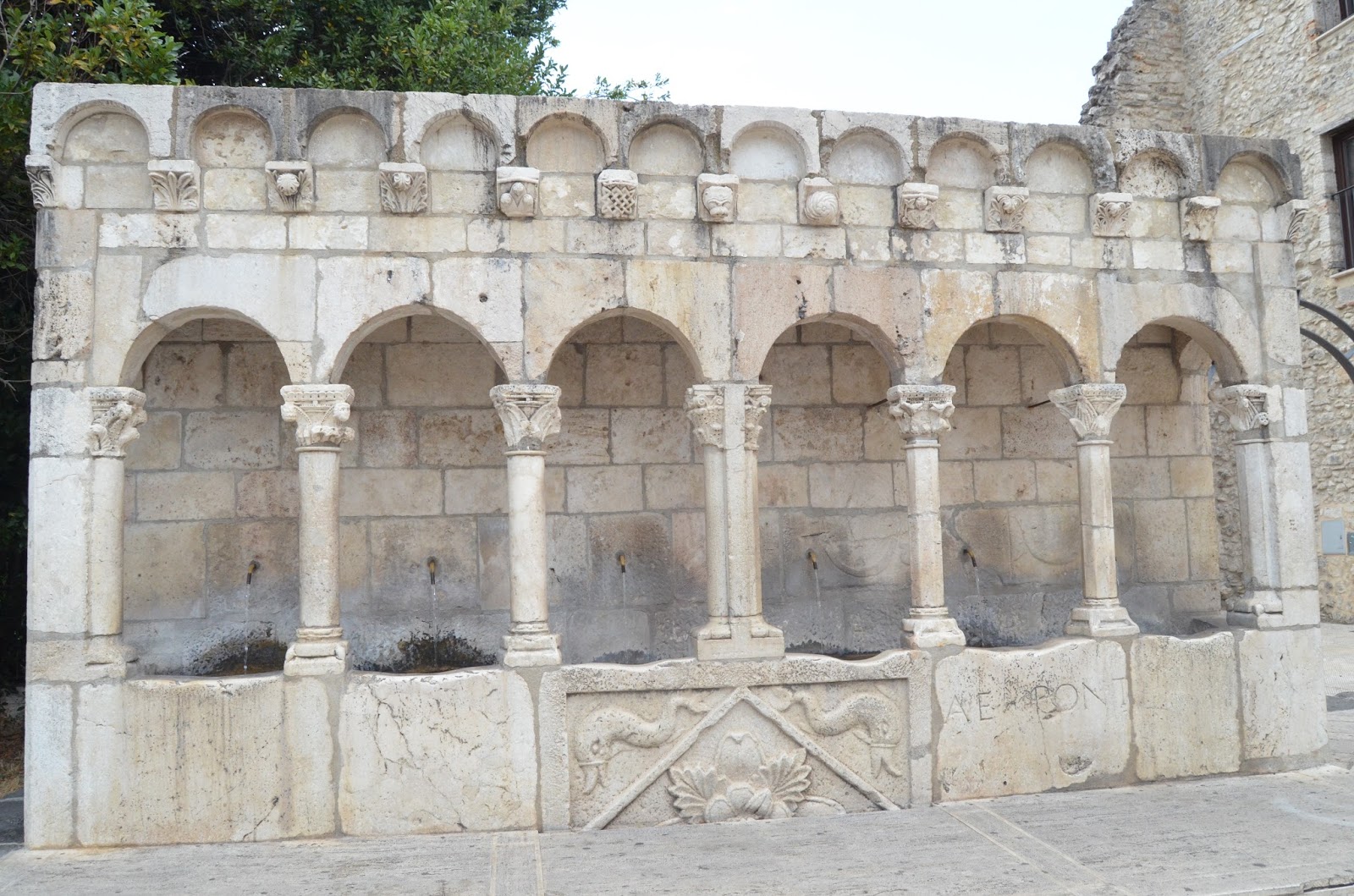
We decided to spend this year's summer vacation in Salerno at my aunt's house, so we had the great idea to stop in Scanno on our way there. Before reaching our destination we decided to stop in the town of Sulmona, famous for being the birthplace of Ovid, the roman poet. Sulmona is also famous for its confetti, or sugar coated almonds, and its historical city center. After entering the town and parking the car next to the main square, we were pleased to see they were setting up stands for the upcoming medieval jousting tournament which we decided to see the next day. In the meantime we started walking around appreciating the nice and elegant architecture of this central Italian city. We passed under the medieval aqueduct built in the 13th century and quickly entered the Church of San Francesco della Scarpa before it closed. We then decided to have lunch as we were rather hungry and opted on the Locanda al Quadrivio under suggestion of dad's friend, as the place served typical food in a medieval-like setting (I had some excellent tagliatelle al cinghiale, pasta with wild boar ragú). Following lunch we got back on the streets and gazed at the splendid setting of Piazza XX Settembre with the statue of Ovid at its center and the bell tower of the Church of the Annunziata peeking behind the houses. We then proceeded to visit such church, with an incredible baroque facade and the Gothic convent next to it. The interior was a surprise as it differed completely from the typical central/southern Italian architecture and would have probably been more apt in the Alps. Completely baroque with wood furnishings and three splendid organs it definitely reminded me of a town in Alto Adige. We then traversed the town along the main street, Corso Ovidio, and reached the Cathedral of San Panfilo which was unfortunately closed. We went back into town and walked around a bit eventually entering the Church of Santa Maria della Tomba with a mix of Romanesque and Gothic styles. The celebrations for the first day of the tournament were starting but we had decided to visit on the next day as it would be when the main event would take place, so after reaching the car we were back on the road to our next stop; Pacentro. Located just a few kilometers east of Sulmona, this little town nestled on top of a hill and surrounded by the beautiful Majella National Park is not surprisingly part of the club the most beautiful villages in Italy. After missing a turn we finally reached the town and after parking the car we immediately headed towards the castle. Built during the 14th century it features 3 impressive towers towering above the town; the ticket cost 2 euros and was run by a bunch of kids which was funny to witness. Descending then into town we walked through it pretty narrow streets and visited the only church, Santa Maria Maggiore with a pretty interior. We then joined our parents who had stayed at a bar to have something to drink, and found our dad speaking with an old man who apparently had emigrated to the US many years ago and comes back to Pacentro every summer on holiday to see his town and friends. It was then time to go so we got back in the car and finally headed towards Scanno. After reaching our destination we parked the car and checked in the hotel my dad's friend had previously arranged, unfortunately they did not accept dogs so my mom and dad decided to get another room in another place in order to stay with honey our dog. There was still some time before dinner so my brother and I decided to walk Scanno's streets and alleys; we entered the main church Santa Maria della Valle, with a Romanesque exterior and partly Baroque interior, and then headed on enjoying the lively streets and warm atmosphere. We then had a lovely dinner with my dad's friends at the restaurant: Ristorante alla Fonte, on a small square with a beautiful medieval fountain, the Fontana Sarracco. The dinner was great with typical dishes from Abruzzo and the friends were really nice and friendly. The next day we woke up late in the morning and the sun was shining bright, we decided to take another stroll around town and headed downhill to the church of Saint Anthony which had an incredible view up towards the old town. After a long but satysfying lunch we got in the car and decided to start heading back towards Sulmona to watch the jousting tournament; however we discovered on our way there that because of a triathlon happening in Scanno there was an incredible amount of traffic all the way to the lake. Luckily after nearly 1 hour stuck in traffic we managed to slip away from the lake and eventually reach Sulmona. In the meantime we were also able to stop for a quick picture in the town center of Anversa degli Abbruzzi which we had seen while driving: another impressive hilltop town also part of the most beautiful villages in Italy. In Sulmona, we parked the car and headed immediately to buy our tickets, we were just in time to see the opening of the celebration and quickly took place on the assigned stands. The tournament was really entertaining, with the neighborhoods of the town divided into teams represented by a chevalier who had to challenge another one into taking as many rings as possible with the spear. After several turns only two were left for the final, and Porta Manaresca won this year's tournament. Following the celebrations after the event, we headed to another restaurant also recommended by my father's friend, called Clemente where we had a really good and typical dinner. Back in Scanno, the next day we woke up late and decided to walk to the lake; we took a trail called the Heart's trail heading from the town of Scanno up to a hermitage and then around a hill where the lake from up top looked just like a heart. Descending then down to the lake side we waited for our mom to pick us up with the car and bring us back to town in time for lunch. It was our last moment here in Abruzzo as we had planned to leave right after, so after a hearty meal and thanking and saying goodbye to our friends, we got all our luggage and drove on towards Salerno. Before reaching our destination I wanted to stop in the town of Isernia, as a joke in Italy says that in truth the region called Molise actually doesn't exist so I wanted to refute such belief. The town is very small, about 20 thousand inhabitants, and was heavily bombed during WWII, however it never fully recovered and looked quite dull and sad. After parking the car we immediately headed to the town's main attraction: the Fontana Fraterna, a part roman part medieval fountain, considered to be one of the most beautiful in Italy. Right next to it was the small museum dedicated to the bombing of Isernia in 1943, with models, objects and several pictures. Inside we found a nice lady who was actually from the U.S. but whose parents were from Isernia, so after many years she had decided to come back. Walking on we passed along the main street, then reaching the Cathedral, built in the 19th century in a Neoclassical style over a previous 13th century Cathedral that had been destroyed by an earthquake, and standing on top of a 3rd century B.C. temple. The only medieval feature remaining is the 13th century bell tower, under which passes the main street and sided by 4 roman statues. Heading on we reached the far end of the town with the church of Santa Maria, which was unfortunately closed so we just decided to head back towards the car. After getting in we finally left heading towards Salerno where we would spend the next 3 weeks at my aunt's house.


Piazza XX Settembre in Sulmona

Interior of the Church of the Annunziata

The celebrations of the Jousting tournament

The town of Pacentro

View of Scanno from the Church of Santo Antonio

Another view of Scanno
 
The crowd dusring the tournament

The chevaliers trying to catch the rings

Scanno's lake in the form of a heart
 
The Fontana Fraterna in Isernia
 
The medieval bell tower in Isernia

Thursday, September 22, 2016

Capua (08/072016)

Today's choice was to visit the ancient town of Capua, located north of Naples. I took an early train from Salerno and reached Caserta train station, from there I then took a bus which dropped me off in the town of Santa Maria Capua Vetere about 7km west. I started my visit with the Basilica di Santa Maria Maggiore, with a baroque interior but some old features still remaining such as roman columns and mosaics. After that I went to the Roman Amphitheater, the second largest in the world after the Colosseum, and one of the oldest in the roman world, it is also famous for being the starting point for Spartacus' rebellion. Unfortunately only a part of the outer ring is fully standing, the one facing south, but nonetheless it was fascinating to walk inside, alone without any other tourists, but with just the company of the guardian's two dogs following me everywhere I went. I also really enjoyed walking below ground level, where the gladiators and the beasts were kept, and also seeing some Samnite tombs from the 4th century B.C. From there I went to see the Archaeological museum, which housed several interesting roman and samnite remains from the area, such as vases, statues, tombs and other objects. Also part of the museum ticket was a visit to a nearby roman mithraeum, an underground temple dedicated to the god Mithra, one of the best preserved in the world, with many frescoes still intact, particularly that of the god killing a bull. I then decided to head north west on foot and visit the medieval town of Capua. I exited Santa Maria Capua Vetere, by walking under Hadrian's arch, a roman arch now serving as the western's city gate. About 12km later I entered Capua through its southern Naples' gate, passed by the Church of the Santissima Annunziata, which was unfortunately closed, but I managed to get in the Church of Sant'Eligio, with a completely white baroque interior, Reaching the far western end of the town, I gave a look at the the roman bridge, with two medieval towers at its end, which was both bombed during WWII but then reconstructed. Not far I went past the Church of Montevergine, which was closed, but a little further on found the Duomo was open so decided to enter. Though heavily bombed during WWII and reconstructed after that, it still holds a few traces of its medieval origin such as the 9th cetury bell tower, the 11th century atrium with roman columns, a medieval crypt with byzantine decorations and a roman sarcophagus. After that I tried to visit the archaeological museum, but found out it was only open in the morning for just a few days of the week, bummer! I was getting a bit hungry so I decided to look for a place to eat, I found this little inn, called Locanda del Pozzo, where the friendly owner talked to me about his town and other stuff as I was the only one there, I had some bruschettas at the beginning and a really good pasta scarpariello, with tomato sauce (total was 10 euros with water included). Right across from the inn is the Castello delle Pietre, a norman castle built in an interesting architectural style. It was then time to go so I got back on the road and travelled in the direction of Caserta, walking back through Capua and passing by an ancient roman tomb on the side of the road as it once was the famous Appian road, eventually reaching Caserta's train station where I got my ride back home. 

The roman amphitheater from the outside 
The amphitheater from the inside
Under the amphitheater

One of the objects inside the museum

The temple of Mithra

Naples gate in Capua

The roman/medieval bridge

The atrium of the Cathedral

One of the streets in Capua