Showing posts with label visiting. Show all posts

Wednesday, December 27, 2017

Nancy (05/03/2017)

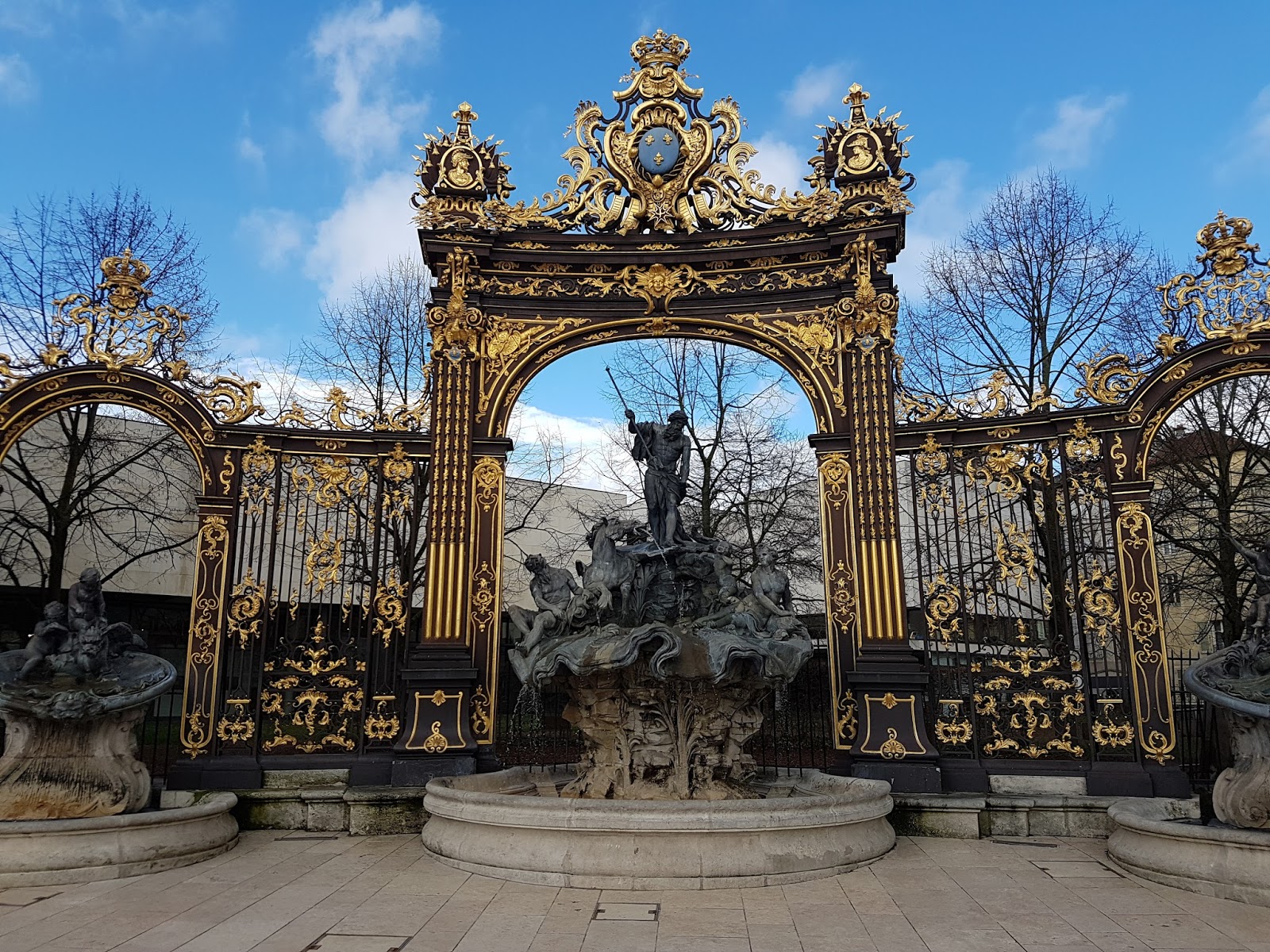
After taking a bus from Strasbourg we reached the outskirts of Nancy two hours later and then had to take the metro to the city center. We got off and began our visit with the Cathedral; dedicated to the Annunciation and to St Sigisbert, it is a great example of Baroque architecture. After visiting its interior we weren't far from reaching the main attraction of the city: Place Stanislas. The square, built in the 18th century under the rule of Stanislaw Leszczynski both King of Poland and Duke of Lorraine, was supposed to be the connecting point between the older medieval part and the newer 17th century part. Surrounded by grandiose buildings such as the Hotel de Ville, the Opera House, the Fine Arts Museums and opened on its northern side by the Arc Héré a triumphal arch. At its north eastern and western ends it featured two fountains surrounded by a golden wrought iron fence. Crossing under the Arc Héré, we reached the long Place Carriere, another of Stanislaw's additions to the city, then reaching the Basilique St Epvre. Built in a neo-Gothic style during the 19th century it featured a large dark interior with nicely-made stained glasses. From there we reached the northern part of the city where the impressive Porte de la Craffe dating to the 14th century. Right next to the gate, we stopped at a bakery called Gollé where we tried a small raspberry cake which tasted really good. After that we headed back to the main square where we decided to visit the Musee des Beaux Arts. Entrance was 4,5 euros and hosted paintings from the medieval times all the way to the modern era, including from famous artists such as Tintoretto, Friant etc. Then we walked back northwards and reached the Musee Lorrain hosted in two connected buildings, the Ducal Palace with a Gothic facade dating to the 15th century and which used to be the home of the Dukes of Lorraine, and the Eglise des Cordeliers also gothic in style. Entrance was 4 euro and the part in the palace featured objects and paintings from antiquity all the way to the 19th century, while the church featured gothic sculptures along with farming tools and furniture of lorraine's past. After a short break where we had some taboulé for lunch, we headed out and south reaching the bottom end of the city, passing the southern gate and reaching the Eglise de Notre Dame de Bonsecours, which is the resting place of Stanislaw Leszczynski but was unfortunately closed. It was then getting late, and getting back into the city center to see the main square by night before taking the bus back to Strasbourg.

Interior of the Cathedral

One of the fountains on Place Stanislas

View of the northern end of Place Stansilas with the Arc Héré

Close up of the Arc Héré

View of the Place Stanislas

The Porte de la Craffe

View of the main square from the Fine Arts Museum

Night view of the main square with the Cathedral in the background

Saturday, August 5, 2017

Lublin, Zamosc & Sandomierz (11-13/11/2016)

This one was the first trip with my girlfriend Ania. We took a really early train from Krakow leaving at 5 am and arrived in Lublin at 10 30am. Luckily the woman checking tickets in the train told us that she would open a carriage just for the two of us as we had found only separate seats, so we were able to spend those five hours in a comfortable way. After getting out of the station we took a bus and went to drop our luggage off at the hotel. We had booked a room in the Hotel Campanile, not far from the city center, so after checking in and leaving our stuff we were already heading into the old town. We first stopped at the Krakow Gate, one of the only surviving remnants of the fortified 14th century wall that used to surround the town of Lublin. Most of its base is from that period while the top dates from the 17th century. Passing under the gate, we reached the medieval core, and entered the small yet pretty Rynek. At its center stands the Crown Tribunal which used to be the seat of the highest appeal court in the Polish Kingdom. We then continued down Grodzka, the main street, and reached Plac Po Farze where the foundations of what used to be the Church of St Michael stand. From there we had a nice view over the surroundings, including the castle. We then exited the old town from the Grodzka Gate, originally dating from the 13th century, but completely refurbished in the 18th century. Crossing the bridge we stopped at the foot of the castle and notice a crowd of people looking down on the castle square. I then figured out what the bustle of people and the polish flags hanging all around was all about. Apparently today was the National Independence Day of Poland, and a large group of military personnel was parading at the castle square. After enjoying the show, we moved on and reached the Dominican Monastery, built in Gothic style it suffered a fire which completely destroyed it and was rebuilt in the Renaissance style; as a mass was taking place we gave a quick look but found it rather pretty. Continuing further we entered the Cathedral of St John the Baptist. Built in the Baroque style during the 17th century for the Jesuits it has a nice interior, and rare for countries in northern and eastern Europe, a lone standing bell tower. We were getting hungry so we decided to have lunch on the main square in a place called Biesy which was quite good. After lunch we were feeling quite tired so we decided to head back to the hotel and rest a bit. After a nice nap we woke up around 7pm and decided to head back into town; we walked through the old town again and enjoyed the cold yet soothing night. We then decided to head back again to the hotel but first stopped at a bar for a hot mulled wine, which we ended taking twice each as it was tasty and heated us up from the cold. The next morning we woke up at an acceptable hour and headed to the bus station where we took a bus leaving at 10am and reaching the town of Zamosc one hour and a half later. A Unesco world heritage site, the town was founded in the 16th century by a polish nobleman, Jan Zamoyski, and under the direction of Italian architect Bernardo Morando as an unique example of a Renaissance town in Central Europe and modeled after the Italian ideal town. After getting of the bus we headed immediately to the main attraction: the main square. The so called Rynek Wielki, measures 100x100 meters and is surrounded by beautiful renaissance houses and the town hall at its northern end. At the north-eastern end of the square stand five beautifully colored houses called the Armenian houses because they stand on Armenian street which used to be built and funded by a rich amernian merchant. We then passed by the Jewish synagogue, as Zamosc along with many other Polish cities used to hold a large jewish population before wwii, and the Franciscan church which was unfortunately closed. However we managed to find the Cathedral open and visited its rich renaissance interior with some rococo additions. We then passed under the Brama Szczebrzeska and reached the Rotunda, a fortification dating to the 19th century, which was regretfully used as a place for mass murdering a large part of the polish population by the Nazis during WWII. After that unpleasing yet touching place, we were back in town and walking along the pretty streets. We had lunch at the Bistro Zamoscianka just as it started snowing outside. We then decided to take a bus back to Lublin to be able to see the museum as it had closed on the previous day because of the national holiday. After reaching Lublin, we were in time to check out the main museum, located inside the castle. For 6,50zl we saw various paintings and object dating from the medieval to the modern times, but most of all the castle church. The Chapel of the Holy Trinity was built in a Gothic style during the 15th century and holds some beautiful Rutheno-Byzantine frescoes, mostly religious scenes but also the portraits of king Władysław Jagiełło. After the visit we decided to go for dinner, and Ania had found a nice Thai restaurant online called Thai Story where I had a nice massaman curry. After sleeping the last night at the hotel, the morning after we took a bus leaving at around 11am that took us to Sandomierz. The bus took around 2 hours and dropped us off right in front of the Opatowska Gate. The main and only remaining old town gate dating to the 14th century; it also has a viewing platform which we climbed up to see the old town from above for 3zl each. It started snowing again, and most of the roofs were already turning white. Once down we walked further and reached the small yet really nice Rynek, not perfectly flat but slightly sloping down towards the river, with the Gothic town hall at its center and colorful house all around its perimeter. We then entered the tourist office and asked if we could leave our luggage while visiting the rest of the town; they kindly agreed. As we were getting hungry we decided to eat at a restaurant on the square where we had a cheap and nice lunch. After that we continued on and reached the Cathedral and entered as it was open. Originally built in Gothic style, it is now mostly Baroque looking and contains an interesting series of paintings depicting the murder of priests and the murder of christian children by the Jewish population. The second part supposedly is an old belief that Jews used to kill christian children to use their blood in rituals, which was obviously never true. Not far from the cathedral we walked further and got to the Castle which dominates the southern end of town on top of a hill and overlooking the Vistula river down below. It was time to go, so we headed back through the old town, grabbed our luggage and took the next mini bus which took us to Krakow in about three hours.

The Krakow Gate in Lublin

The Rynek in Lublin

View of the Lublin castle

The so-called Armenian Houses in Zamosc

The Rynek in Zamosc

The Castle church in Lublin

Opatowska Gate in Sandomierz

View from the tower over Sandomierz

The Sandomierz town hall and main square

View of a street and the Cathedral of Sandomierz

Sunday, January 22, 2017

Certosa di Padula and Teggiano (13/08/2016)

On this day we decided to head south from Salerno and visit the Padula Charterhouse. It is considered to be the first charter-house built in the Campania region, and the largest in the whole of Italy. Together with Paestum (which I had already visited), the Cilento National Park and the greek and roman city of Velia it is inscribed in the Unesco World Heritage Site list. Construction on the building started in 1309 and was protracted till the 18th century, with most of it dating to the later period due to alterations and reconstructions. So we left Salerno after lunchtime and reached Padula around 3:30pm, with an hour and twenty minutes drive. We parked the car and headed on foot towards the entrance, located on the southern side. We crossed the main courtyard, sided by the stables, granaries, and other buildings that hosted all kinds of shops, and reached the main facade. Dating to the 16th century in a baroque style, the facade is probably one of the most noteworthy features of the whole complex. Once we passed through the entrance we bought our tickets (4 euros full price and 2 euro for student discount) and were given a map of the complex, as it is really large. From there we followed the suggested path, passing through the first cloister called Chiostro della Foresteria, because it was adjacent to the guest lodgings, which had a nice fountain at its center and then entering the church. The interior, dating to the 17th century is a joy of the neapolitan baroque with beautiful decorations, colorful paintings and lavish marbles. We then went through several rooms which included the Hall of the Bells, the Hall of the Chapter and the Hall of the Treasure, all with beautiful baroque decorations. Next was the cloister of the old cemetery and right next to it, through a door, the large Refectory which used to serve as the dining room of the monks. After that we entered the Kitchens, a beautifully preserved example of cooking space (which rarely survives in charterhouses and monasteries) with a huge furnace and chimney at its center and maiolicas decorating the walls. Right beside, through a door, is another cloister, this time very small and in the shadows as it still maintains its 14th century style and architecture. Following the map we reached what were once the Prior's rooms. now housing the Archaeological museum with ancient greek vases, weapons and other objects. There were also two cloisters, the so called Chiostro dei Procuratori and the Prior's cloister which is more like a small italian garden with trees and fountains giving it a peaceful and beautiful setting. Moving on we reached the Great Cloister, an immense rectangular (104x150m) with two floors on all sides and containing the monks' cells. It is in fact the largest cloister in the world, and took us quite a while to walk from one side to the other. We were done visiting so we headed back through the complex and out to the car. It was around 6pm and we decided to go to the nearby town of Teggiano as on that same day they were having a Medieval reenactment which we decided to see. So parking the car outside the historic town and taking the mandatory bus up the hill, we reached the city center. Before the actual fair started we decided to enter the two main churches on the central square: the Church of St Francis and the Cathedral. The first had an interesting baroque interior with some medieval frescoes still remaining, while the Cathedral, also baroque, had several medieval tombs and a beautiful Ambon dating to the 13th century. Exiting the church, we joined the multitude of people, standing to watch the parade start, with many people dressed in medieval costumes, dancing, singing and performing all along the streets. When the parade ended we decided to walk further on through the narrow streets, and ending up in another square overlooking the beautiful valley down below surrounded by mountains. It was getting time for dinner, and each neighbourhood, or rione, was setting up a open air food court on small square around town so we decided to look for a nice one to have dinner. We settled for the Wolf tavern which served excellent boar meat. Then after dinner we went back to the main square and saw the firework show which ended the day and the festival in a great party atmosphere. After that it was time to head back as we still had an hour and a half to go home in Salerno and rest after a great day.

View of Padula

The entrance to the charter-house

Interior of the church

The Refectory

The kitchen

The Prior's cloister garden

The Great cloister, the largest in the world

View of the town from the cloister

The parade in Teggiano with the castle in the background

Medieval costumes

One of the many churches in town

Knights taking a rest after the parade