Tuesday, March 9, 2021

Subiaco (08/03/2020)

Before the lockdown had come into effect in Italy due to the Coronavirus crisis, my brother, my brother's friend Angelo and I, had decided to rent a car and do a day trip to the town of Subiaco. east of Rome, among the Simbrunini mountains. After about one hour of driving we reached the town of Subiaco and decided to head further and visit the famous monasteries first. So after parking our car we then continued on foot following a trail leading up the mountain until we came in sight of the Monastery of San Benedetto also known as Sacro Speco built on the side of Monte Taleo. The origins of the monument are old, as it was here during the 6th century that Saint Benedict of Nursia lived as a hermit inside the small caves that dotted the area. The cave where the saint lived became a place of worship already in the same century and the first artistic representations followed from the 8th century onwards. As we approached the monastery we noticed how incredibly embedded in the rock and overhanging the valley below it was, and entered through to visit the interior. Walls, vaults, and stairs, perfectly integrated into the stone on which they rest, with their irregularity, guarantee an authentic suggestion when visiting and a confused sense of being in a complex labyrinth. The monastery is made up of two churches, one over the other, with chapels and caves all entirely frescoed. We started out by visiting the upper church, which was built as the last part of the whole complex, but which looks the most impressive with its large main nave featuring beautiful frescoes dating to the 13th and 14th centuries. The large fresco of the Crucifixion which appears right in front as soon as one enters is a masterpiece to admire; around it are further frescoes depicting the life of Jesus. In the back, where the main altar lies, are frescoes depicting the life of Saint Benedict and a particularly nice one showing him on a chair. A small staircase then leads down to the lower church, where the spaces became narrower and more irregular. Here there we more frescoes detailing the lives and miracles of other saints, more of Saint Benedict. Here is also the original cave where Saint Benedict lived for three years as a hermit. A small staircase then led up into the rock in the small chapel of San Gregorio where we saw an interesting fresco depicting Saint Francis before he received the stigmata in 1224 and thus probably the oldest representation of the saint. As we continued on we walked down the Scala Sancta, or holy stairs, where an interesting fresco of the Triumph of Death depicts death riding a horse with an unsheathed sword, proceeding at a fast pace, regardless of those who it overwhelms in its passage (nobles, monks, ladies, etc). The staircase then leads to the chapel of the Madonna where more frescoes complete the cycle, including a nice Annunciation. Here a small door then led outside to a little terrace overlooking the valley below. We then decided to walk the whole complex back up, re-admiring all the beautiful and detailed frescoes inside before coming out once more from the upper part. After walking back down the mountain and reaching our car we decided it was time to head to town and look for a place to have lunch. We chose a restaurant called Aniene where we had a good lunch with typical local dishes. After eating we decided to visit the city center; we started right next to the restaurant where the nice baroque Basilica of Sant'Andrea Apostolo was located. We then continued on and walked uphill through the pretty streets of the old town, visiting the church of Santa Maria Della Valle on the way. We then approached the Rocca, the castle built on the top of the hilltop at the center of the town. Built during the 11th century by the abbot Giovanni V it later became known as the Rocca dei Borgia as it was supposedly here that Giovanni, Cesare, and Lucrezia, the children of Rodrigo Borgia, future Pope Alexander VI and his lover Vannozza Cattanei, were born. As we reached the top of the castle where the nice clock tower is located, we admired the beautiful view of the town below and the surrounding mountains. From there we walked back down through the old town and reached the car once more in order to head to visit the next monastery, that of Santa Scolastica. After passing the remains of what was once the ancient Roman villa of Emperor Nero, we parked next to the monastery and entered through the main gate where a group of people was waiting for the guided tour to start. We gathered around as well and waited for our turn when finally a monk came to lead us through the complex. This monastery was one of the twelve monasteries wanted by Saint Benedict and was found in 520 making it the oldest benedictine monastery in the world. Of the twelve, this one is the only remaining one, the others being destroyed by Saracen incursions and earthquakes. As our tour started, we were first brought through the main renaissance cloister dating to the 16th century with a statue of Santa Scolastica at its center. We then walked onwards and reached the second cloister, this one featuring a beautiful Gothic style built between the 13th and 14th centuries. The cloister has an irregular plan, with a nice hexagonal well at its center and a beautiful flamboyant gothic portal on one of the sides. Through a gallery, we then reached the last, smallest but most beautiful of the cloisters, the one called of the Cosmati from the leading family workshop of craftsmen in Rome who created such geometrical marble decorations. The cloister features in fact a beautiful array of decorated columns and arches and its galleries are frescoed with the medieval towns that were under the jurisdiction of the monastery. From the cloister, we could also admire the elegant Romanesque bell tower that juts out from among the rooftop. After visiting the monastery we decided to head downhill through a path that led us to the nice quaint Laghetto di San Benedetto. This little pond nestled in the forest featured a nice waterfall and stream running down the valley. We walked around enjoying the peace and quiet of the place and then headed back up to the car. Our last stop for the day was the nice Ponte di San Francesco, located on the western side of town. This nice humpback bridge dates to the 14th century served as a crossing over the Aniene river and still features a guard tower at one of its ends. We took a few photos there and met a friendly dog walking about, before finally getting back in the car and driving home to Rome. 

View of the Monastery of Santa Scolastica

The Monastery of San Benedetto, known as the Sacro Speco

The fresco with the Crucifixion

Fresco of the stories of St Benedict

The frescos along the staircase

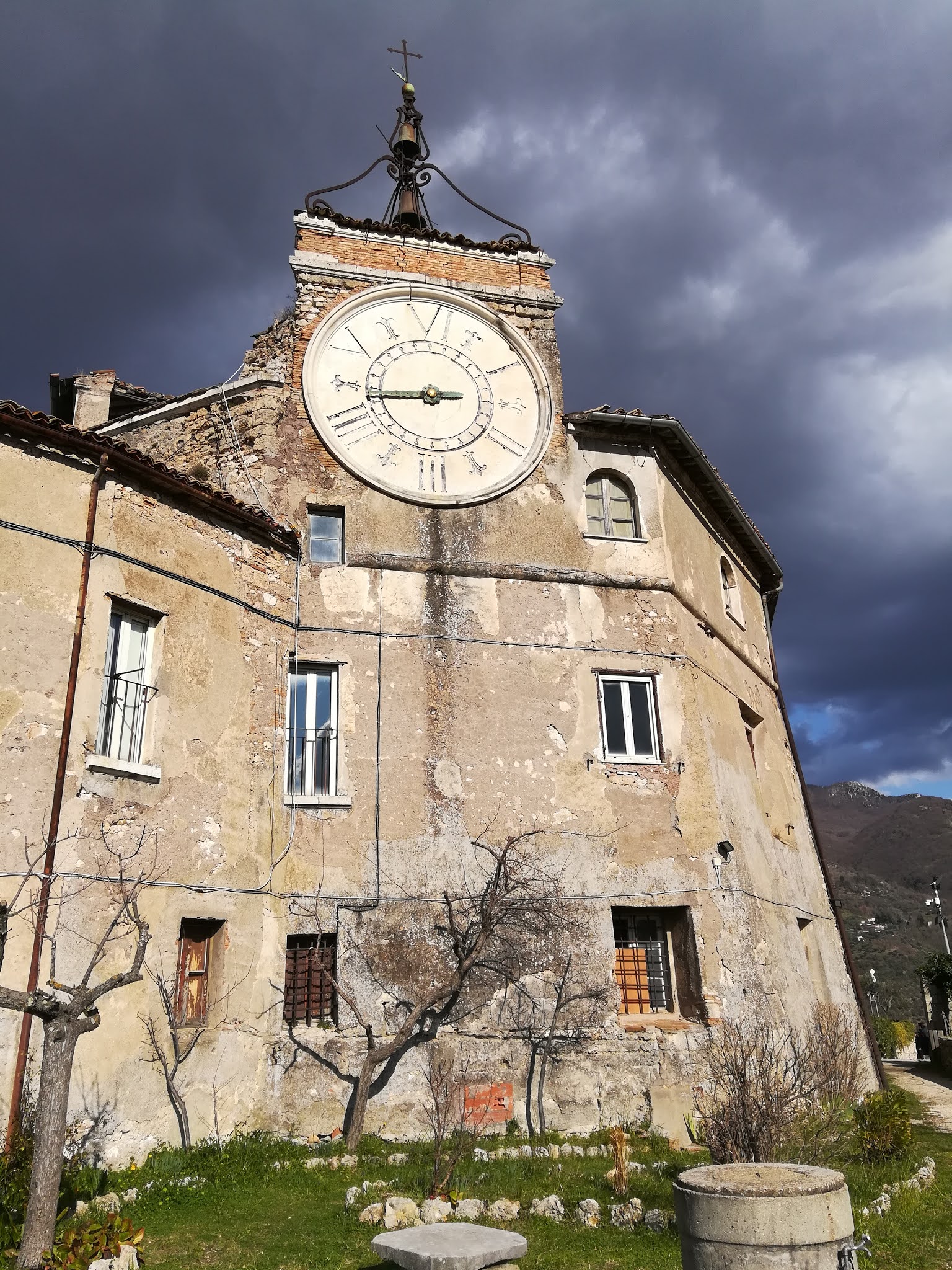
The clock tower of the Rocca dei Borgia

View from the Rocca dei Borgia

The Gothic cloister and Romanesque bell tower of Santa Scolastica

Another view of the cloister of Santa Scolastica

Frescos in another of Santa Scolastica's cloisters

The medieval bridge Ponte di San Francesco

View of Subiaco


Monday, March 1, 2021

Arsoli, Riofreddo, Cineto Romano & Roviano (22/02/2020)

Another sunny weekend another day trip from Rome, this time northeast from the capital close to the border with Abruzzo. My first stop was the town of Arsoli; after reaching the train station I got off the train and started the hike on foot. Downhill from there I then reached the small old town, with its nice winding medieval streets and the massive structure of the Castello Massimo on the highest part of town. The castle was unfortunately closed and looked like it had been so for a long time. Nonetheless, I managed to observe it from the square below where the main church, Chiesa del SS. Salvatore is located. The church was closed as well so that prompted me to continue onwards towards the next town. As I walked uphill I managed to reach a nice spot from where I had a great view of the old town; then continuing onwards I followed a trail which in a few kilometers brought me to the town of Riofreddo. As I exited the forest trail and reached the hilltop where the town is located, I passed by the Villa Garibaldi, a 19th-century villa built by one of Garibaldi's sons, Ricciotti, which now holds the local history museum. From there I headed down through the old town and visited its pretty historic center. I passed through the main square where the church of San Nicola is located, and reached the other end of town where the castle is set, at that time being under refurbishment. Once there I then decided to head further and exited town through another trail, taking me over a nearby mountain and through beautiful landscapes. Not long after I passed by a small stream and some waterfalls, the Cascate di Rioscuro, before reaching a series of olive groves and the first houses of the following town, Cineto Romano. Probably the most picturesque of the towns visited that day, it featured a nice quaint medieval city center and an impressive castle dating to the 11th century at its center and highest point. I first admired the view of the old town and surrounding mountains from a vantage point to the north, and then headed down through its pretty streets. I passed under the nice clock tower and reached the castle itself. As it is private property I could not visit it but still admired it from the outside and the view it granted over the town and valley below. Here I decided to have the lunch I had brought with me while basking in the unexpectedly warm sun. Once I was done, I put on my backpack and got on my feet to continue my hike. I followed another trail this time headed first through a nice forest and later among olive groves and a beautiful view of the Aniene Valley. After a while, I then reached the next and last town, Roviano. I approached the town from the west and admired its skyline as I walked through the suburbs and reached the old town. Maybe because of the hour but this town seemed much lively than the others as a large group of people had gathered in the main square and were dancing to very loud music, kids and elderly alike. I then walked through the nice streets and reaching the castle which, like the other towns, sits at the center and the highest point of the town. Here I admired the structure from its central courtyard and then continued on visiting the rest of the city center. Finally, it was time to head to the train station, not far from the old town, where I waited for my ride home while admiring the beautiful sunset and views of the valley below and surrounding mountains. 

The Castello Massimo in Arsoli

View of Arsoli

Villa Garibaldi in Riofreddo

Riofreddo's old town

An old Alfa Romeo in Riofreddo

View of the mountains surrounding Riofreddo

View of Cineto Romano

The clock tower of Cineto Romano

The path leading to Roviano

A street in the old town of Roviano

View of Roviano


Saturday, February 6, 2021

Alviano, Lugnano in Teverina, Porchiano del Monte & Giove (15/02/2020)

 This time I headed for a day trip alone, deciding to visit a few small towns in Umbria, close to the border with Lazio. After taking the train from Rome I reached the station of Alviano, where I got off and started my hike. The station is located down the valley right by the Tiber river, so that meant walking uphill from there. After a few kilometers in the countryside, I reached the first town: Alviano. This small town sits on top of a hill and is dominated by its impressive castle. Built during the 16th century in full Renaissance period, it substituted an older medieval structure and its name was connected to the famous condottiere Bartolomeo d'Alviano, as his family possessed its fiefdom. During the 17th century, it passed on to the Doria Pamphilj family that then gave its name to the castle, one which it holds to this day. Nowadays the fortress holds the seat of the municipality so I was able to see the inner courtyard and first floor featuring nice arches. After the visit to the castle, I then strolled around the two streets of the small town, ending then back where I entered the town and where a nice market was set up. Here I decided to buy a carrot and an apple to snack on, and the man at the stand said I could have it for free to which I thanked him very much. From the castle, I then took a street heading out in the countryside which I followed for a while heading further uphill and among olive groves. The view from up there was spectacular with the sight of the old town and castle and the Tiber river valley below. Continuing onwards for a while I then reached the next town: Lugnano in Teverina. Another town built on a hilltop, it is part of the club the most beautiful villages in Italy and is surrounded by beautiful olive groves. I headed in the old town through the northern city gate, as the town is surrounded by medieval walls, and reached the central square where the beautiful Collegiata di Santa Maria Assunta is located. Built in the Romanesque style between the 11th and 12th centuries it features an elegant portico on the front with a rich iconography including the Four Evangelists. The interior features columns with an even more interesting iconography and the floor is covered in a beautiful Cosmatesque mosaic. A nice iconostasis separates the rest of the church from the presbyterium which holds an ancient ciborium. After visiting the church I then continued to explore the rest of the old town with its pretty streets and the great view of the surroundings. Afterward, I then continued on through more countryside and through a nice Etruscan via cava, until I reached a hilltop covered in forest which I proceeded to hike up. Here I found the Monastery of the Santissima Trinità a nice 12th-century monastery featuring a church and tower in a peaceful setting. From the monastery, I then followed a trail which in a short time took me to the town of Porchiano del Monte. Smaller than the previous, this town featured a beautifully preserved medieval wall dotted by fortified towers and a nice quaint old town. From the top of the walls, I admired an amazing view that spanned all the way to the snow-capped Terminillo mountain to the north. After walking through the city center I then headed out of one of the city gates and southwards, downhill, walking further through the countryside. The olive groves gave way to untilled fields until I reached the last town: Giove. Here I first visited the church of Santa Maria Assunta built during the 18th century in a nice baroque fashion with two flanking bell towers. Right in front of it was the old town and the main monument, the castle. Originally dating to the 12th century it was fully rebuilt in the 17th century with the new tastes of that period, to look more like a palace than a cold dark defensive structure. Unfortunately, the building was mostly covered in scaffolding due to its current refurbishment so I wasn't able to admire it fully. I decided then to walk through the old town streets and admire the rest of the center which also held some nice view over the Tiber valley below. Once I thought I had seen enough, I then exited the town and walked past the castle once more where a nice park with different kinds of trees was set right below the medieval walls. Then following the road downhill I finally reached the train station of Attigliano, from where I took my train back to Rome. 

The castle of Alviano

View of the town of Alviano with its castle

The Collegiata di Santa Maria Assunta in Lugnano in Teverina

Interior of the Collegiate church

Old town of Lugnano in Teverina

View from Lugnano in Teverina

The Etruscan via cava

The Monastery of Santissima Trinità close to Porchiano del Monte

View from Porchiano del Monte

Old town of Giove

The walls of Giove


Tuesday, February 2, 2021

Zagarolo, Palestrina & Castel San Pietro Romano (08/02/2020)

On a nice February weekend, my brother and I decided to take a day trip from Rome and visit a few small towns just east of the capital. We took a train and reached the station of Zagarolo where we started our hike uphill from there. Our first stop was the small town of Zagarolo, just a few kilometers from the station. Built on top of a tufaceous hill it features an elongated old town running atop the hill. As we reached the city center we first came across the large Palazzo Rospigliosi, once a castle belonging to the Colonna family, it was later transformed into a palace during the 16th century and decorated by famous artists of the time. The interior even features references to the battle of Lepanto as the Colonna family was one of its main representatives during that conflict. From the Colonna family, it then passed over to the Rospigliosi family which held it until the city became its owner after the second world war. It now holds the toy museum which we decided not to visit as we still had much to see. From the palace, we then continued through the old town and reached the large church of San Pietro with a beautiful baroque cupola and interior. Onwards we then reached the central square by a beautiful scenic building made up of dark tufaceous stone. Built in the 17th century it featured some interesting figures on its facade and is now used as the town hall. On the other side of the square stands the church of San Lorenzo with a nice baroque interior. After reaching the end of the town we turned back and walked back through the city center until we reached the large Piazza Santa Maria with a baroque fountain at its center. Here we turned left and walked in the direction of our next stop: Palestrina. After walking through a nice open countryside we then came in sight of the first houses of the town and not long after reached the central Piazza Regina Margherita. Here we first visited the Cathedral of Sant'Agapito featuring a nice Romanesque exterior; the interior had been remade during the 19th century in Neoclassical style. Back in the square we then admired the facade of the palazzo del Seminario which was built over the ancient Roman basilica that faced the forum, now the town's square. Traces of its ancient past are visible on both the facade and below the square to the side. As we continued onwards we started our ascent of the city, which is built on the slope of the Monte Ginestro. As we walked up the terraced streets we came upon the church of Sant'Antonio Abate, which featured a nice baroque interior. Then a few more turns uphill we finally reached the large Palazzo Colonna Barberini where the archaeological museum is located. This incredible palace originally built during the 11th century was refurbished during the 15th and 16th centuries to take its current baroque circular form. It was built on top of the ancient Temple of Fortuna Primigenia which covered the whole side of the mountain, going from where the palace is located on the top, all the way down to where the forum, now the main square, is located. That explained the terraced streets we were walking on our way up. We decided to head inside the museum, and after purchasing the ticket, started to explore the nice exhibition. The objects inside came mostly from the temple itself or the surrounding necropolises and featured some interesting pieces. The highlight of the museum was the Nile Mosaic, a late Hellenistic floor mosaic from the 1st century B.C. depicting the Nile river and scenes with Ptolemaic Greeks, Aethiopians in hunting scenes, and various animals. Its large size, 5.85 meters to 4.31 meters, and beautiful details make it an extraordinary piece and provide a glimpse into the Roman fascination with ancient Egyptian exoticism. After visiting the museum we then headed out and across the street to see the ruins of the terraced part of the temple which had a beautiful open view towards the town below and the landscape all around. Here we explored the traces of elegant columns, decorated niches, and bases of altars. Once we had seen enough, we headed back up the terraces and from the museum took a trail heading up to the top of Monte Ginestro. As we reached the top we came in sight of the small town of Castel San Pietro Romano, part of the club the most beautiful villages in Italy. This small town which dominates the Valle del Sacco, a nice valley extending from east to west just below Palestrina, holds a small yet interesting historic center. We walked through its pretty streets, stopping to have a look at the church of St Peter, built in the Baroque style. Then we visited the Rocca, the castle built by the Colonna family to rule over these lands. The view from the top was incredible: on one side the valley below and on the other the Prenestini mountains. This was also a great moment to admire the view as the sun was starting to set, giving the entire setting a golden hue. We then decided it was time to head back, so we retraced our steps following the trail that lead us back through Palestrina and then out through the southern city gate. We walked through the countryside as it started to get dark and manage to reach the train station of Zagarolo from where we took our ride back to Rome. 

The Palazzo Rospigliosi in Zagarolo

The cupola of the church of San Pietro

The main square in Zagarolo

View of Zagarolo

The countryside on the way to Palestrina

The Cathedral of Sant'Agapito in Palestrina

The main square, Piazza regina Margherita

The Palazzo Colonna Barberini

View from the palace

The interior of the National Archaeological Museum inside the Palazzo Barberini

The beautiful Nile mosaic

Details of the mosaic

Another view of Palestrina

Ruins of the Temple of Fortuna Primigenia

The ancient roman road and the church of Sant'Antonio Abate

The castle of Castel San Pietro Romano

Entrance to the castle

The view from Castel San Pietro Romano